
Education Cannot Wait Backs 300,000 Children in Crises, ASEAN Commits to Reading and Math and More
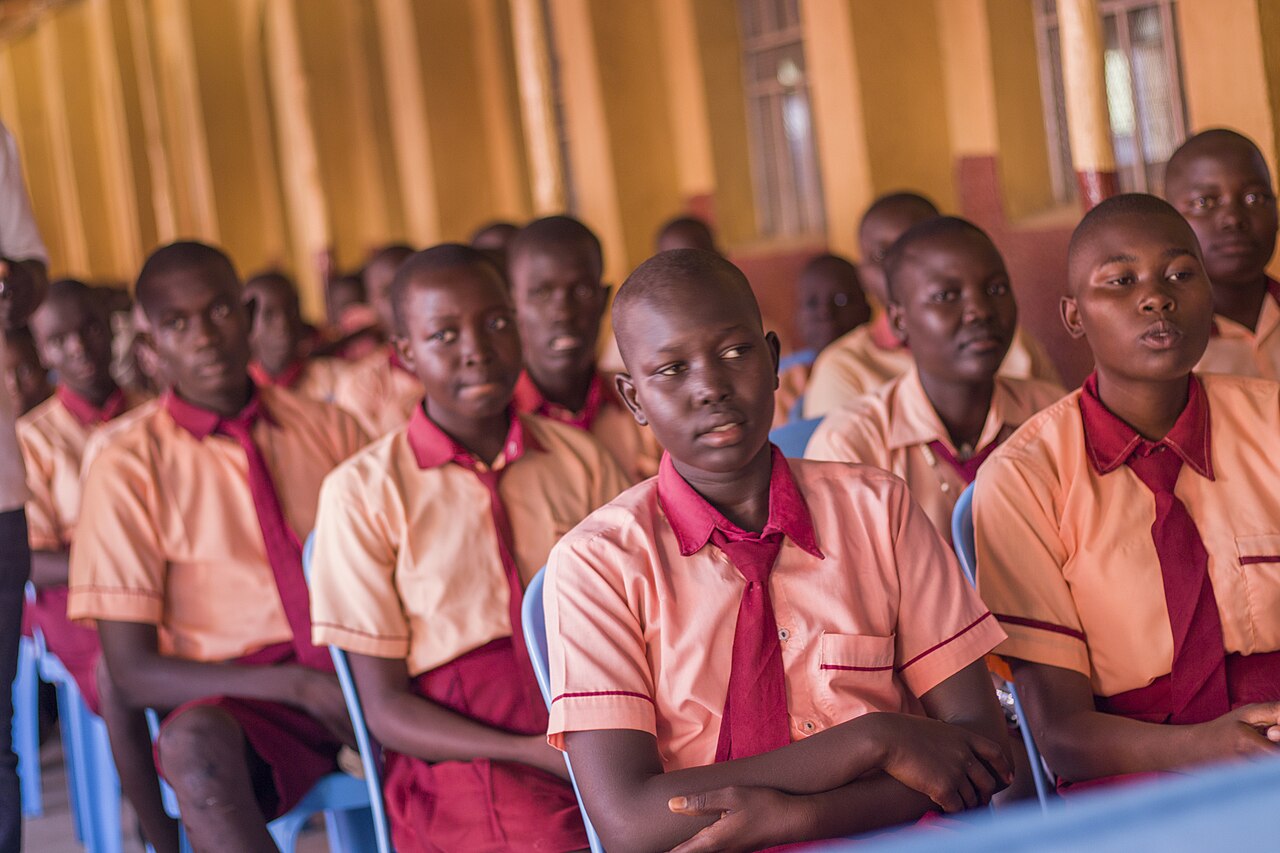
On World Children's Day, today's education news stretches from Geneva to Manila to northwest Nigeria. A UN fund is putting new money behind more than 300,000 children whose schooling has been broken by war, floods and displacement in Lebanon, Myanmar and South Sudan. Southeast Asia's leaders have made basic reading and math a shared regional priority. And in three Nigerian states, UNICEF has laid out both the progress and the long road ahead in bringing out-of-school children back to class.
Lebanon, Myanmar and South Sudan: $52 million to keep children in crises learning
Education Cannot Wait, the UN's global fund for education in emergencies, announced US$52 million on November 20 to help more than 300,000 children get back to learning, catch up on lost lessons and receive psychosocial support. The fund notes that 258 million children worldwide have their education disrupted by crises. In all three countries, at least half of the children reached are girls, and about one in ten is a child with a disability.
In Lebanon, where more than 390,000 children are among over 1.1 million people displaced since the conflict escalated in March 2026, a $13 million program led by Ana Aqra Association and the International Rescue Committee will help about 59,000 children back into school. In Myanmar, $16 million will reach nearly 150,000 children and adolescents, half of whom are out of school today. In South Sudan, where around 2.8 million children are out of school, $23 million will reach more than 100,000 children through a program led by Save the Children International and the national organization UNKEA. Most of the money is managed by or goes to national and local groups, and more than $5 million is set aside to be released quickly when the next crisis hits.
"Every child has the right to learn, and for children living through war, floods and displacement, school is often what keeps hope alive," said Maysa Jalbout, Director of Education Cannot Wait. The fund has reached 90% of its $600 million goal for 2027 to 2030 and is still seeking $58.4 million to close the gap.
Southeast Asia: leaders commit to stronger reading and math foundations
At the 49th ASEAN Summit in Manila on Monday, November 16, leaders adopted the ASEAN Declaration on Foundational Learning, committing member states to improve children's reading, mathematics and socio-emotional skills. The Philippine Department of Education proposed the declaration in February, and ASEAN education ministers endorsed it in Singapore in July. "Building a strong, competitive region starts with the basics: giving every child a solid grip on reading and math from the very beginning," said Education Secretary Sonny Angara.
Under the bloc's education work plan for 2026 to 2030, the Philippines will design a regional Academic Recovery and Catch-up Program (ARC-UP) for 2027 to 2029, so countries can share data, direct resources to struggling learners and scale up strategies that work. Rappler reports that Cambodia is co-leading the effort and will pilot a catch-up model for other countries to learn from.
The need is real. The ASEAN work plan, as cited by Rappler, says Singapore, Vietnam and Malaysia reported more than half of primary students meeting minimum proficiency in reading and math, while in Laos, Myanmar and Cambodia fewer than 20% did. Rappler also notes that the Philippines will need to make sure its own national catch-up program, ARAL, has enough funding to help struggling Filipino students.
Nigeria: 68,000 children reached, with hundreds of thousands still waiting
Speaking in Sokoto on Friday, November 20, Michael Juma, chief of UNICEF's Sokoto Field Office, said work with the governments of Sokoto, Kebbi and Zamfara states has identified about 624,000 out-of-school children, Channels Television reports. Roughly 68,000 of them have so far been reached through re-enrollment efforts, and about 98,000 children have taken part in Teaching at the Right Level, a program that builds basic reading and numeracy.
According to the Nigerian Tribune, UNICEF is also supporting teacher development, learning materials, accelerated basic education, integrated Qur'anic education and alternative learning through radio lessons and the Nigeria Learning Passport. Juma said education programs in the three states were not affected by the funding cuts seen earlier in the year.
He was candid that the gap between children identified and children back in class is wide, and called for firmer state leadership, steady funding and community support. "We need balanced reporting that highlights development achievements while also drawing attention to the gaps that continue to affect children's wellbeing," he told journalists.
Why it matters
Getting children into a classroom is only the first step; they also need to stay there and actually learn. Today's stories show both halves of that work: emergency funding that keeps school going when crises hit, regional plans to make sure children can read and count, and the patient work of finding children who have slipped out of school and bringing them back.
Learn more
- Education Cannot Wait: Education Cannot Wait announces US$52 million to keep 300,000 children learning in Lebanon, Myanmar and South Sudan
- Daily Tribune: ASEAN adopts Philippine-led declaration to strengthen foundational learning
- Rappler: Amid learning crisis, PH to lead ASEAN bid to boost reading, math skills
- Channels Television: 624,000 Out-Of-School Children Identified Across Sokoto, Kebbi, Zamfara – UNICEF
- Nigerian Tribune: UNICEF raises alarm over 624,000 out-of-school children in Sokoto, Kebbi, Zamfara
Sources: Education Cannot Wait (via PR Newswire), "Education Cannot Wait announces US$52 million to keep 300,000 children learning in Lebanon, Myanmar and South Sudan," 20 November 2026; Daily Tribune, "ASEAN adopts Philippine-led declaration to strengthen foundational learning," 16 November 2026; Rappler, "Amid learning crisis, PH to lead ASEAN bid to boost reading, math skills," 18 November 2026; Channels Television, "624,000 Out-Of-School Children Identified Across Sokoto, Kebbi, Zamfara – UNICEF," 20 November 2026; Nigerian Tribune, "UNICEF raises alarm over 624,000 out-of-school children in Sokoto, Kebbi, Zamfara," 20 November 2026.
How you can help
These organizations work on the issues in today's stories:
- Save the Children helps children affected by conflict and disaster keep learning, and its global arm, Save the Children International, is leading the new Education Cannot Wait program in South Sudan.
- Room to Read helps children in the early grades become independent readers and supports girls to complete secondary school.
- Street Child works to get out-of-school children in crisis-affected countries into school and learning.
💬 0 replies
Inloggen to reply.