
Haiti's Farmers Fight Back Against Hunger, Zambia's Smallholders Lift Maize Yields and More
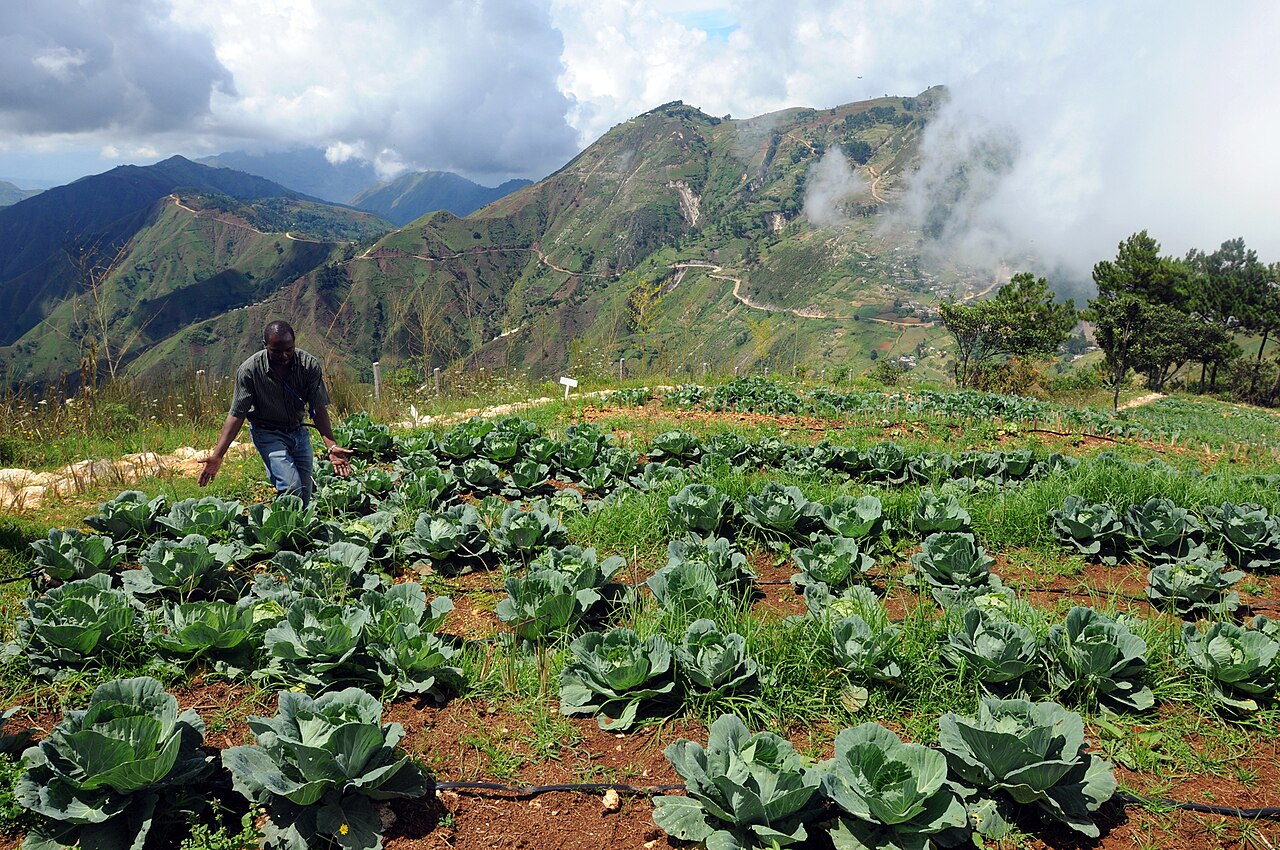
Today's food and nutrition roundup travels from the hillsides of Haiti to a meeting room in Rome, the maize fields of Zambia and school kitchens in Kenya and Rwanda. Each story shows people finding practical ways to grow more food, feed children better and keep hunger from getting worse, even as the hardest work still lies ahead.
Haiti: farmers rebuild as hunger reaches half the country
Years of gang violence, displacement and economic trouble, now joined by El Niño, have left millions of Haitians struggling to eat, UN News reported on 21 November. An estimated 6.35 million people, roughly half the population, are expected not to get enough food between March and June 2027, and almost two million of them will be at emergency levels. More than 1.5 million people have fled their homes, and the number of people affected by drought is projected to reach four million by December 2026.
Farmers are still planting. The World Food Programme, working with Haitian authorities, has supported 2.6 million people this year, and its school meals reach more than 620,000 students, with 74 percent of that food bought directly from local farmers. The Food and Agriculture Organization (FAO) is giving families poultry and goats so they can earn and eat right away. "Receiving these goats helps boost our activities and strengthen our capacity, giving us more resources to support our children with school and meet their needs," farmer Délivrance Dovily told UN News.
UN agencies are also rebuilding rural roads and water systems and offering crop insurance against drought and heavy rain. The need is still far larger than the help, and insecurity keeps food from reaching many of the people who need it most.
Global: two years of an alliance against hunger and poverty
At FAO headquarters in Rome on 18 November, the Global Alliance against Hunger and Poverty marked its second anniversary, FAO reported. Launched by Brazil's President Luiz Inácio Lula da Silva at the 2024 G20 Summit, the alliance now includes 223 countries and organizations, and its planning work spans 20 countries. Its new report, The Race to 2030, documents 146 actions involving 81 members.
The numbers show real but uneven progress. Some 645 million people faced hunger in 2025, around 14 million fewer than the year before and the third year of decline in a row. FAO Chief Economist Máximo Torero pointed to Brazil and the Dominican Republic as countries that have made significant strides, and urged support for social protection, school meals and small-scale farming. "Jobs and rural development can not only help prevent people from falling back into hunger, but also help reduce conflict," he said.
On current trends, hunger would still affect around 510 million people in 2030, far from the goal of ending it. The report estimates that lifting everyone above the $3-a-day poverty line would cost around $311 billion a year, about 0.17 percent of global GDP.
Zambia: smallholder farmers harvest more maize
On 20 November, Zambia's government received the tools and knowledge built over seven years by the Sustainable Intensification of Smallholder Farming Systems project (SIFAZ), the European Union Delegation to Zambia announced. Funded by the European Union and run by the Ministry of Agriculture, FAO and the research center CIMMYT, the project reached more than 62,000 smallholder farmers, and women make up nearly 60 percent of them.
Farmers using its sustainable practices, which build soil health and use seed and fertilizer more efficiently, averaged maize yields of 3.7 tonnes per hectare, compared with a national average of around 2.3 tonnes. The handover includes Mulimi360, a digital platform the ministry can now use to send timely farming advice across the country, along with training manuals and policy recommendations.
The real test comes next: whether Zambia can keep these services running and reach the many farmers outside the project now that the ministry is in charge.
Kenya and Rwanda: whole grains make school meals more nourishing
Close to one million schoolchildren in Kenya and Rwanda now eat fortified whole-grain maize meal in their school porridge or ugali, The Star reported on 19 November, International Whole Grain Day. About 600,000 of those learners are in Kenya and close to 400,000 in Rwanda. Unlike refined flour, whole-grain flour keeps the bran and germ, with their fiber, vitamins and minerals.
Rwanda shows how the idea can grow. A 2021 pilot with 13,500 learners found that 97 percent preferred the whole-grain porridge, the program expanded to more than 74,000 children in 81 schools, and the government is now rolling it out in phases to more than 4.3 million learners. "In Rwanda and Kenya, close to a million schoolchildren today eat fortified whole-grain maize meal at no extra cost to government, and they say they enjoy the taste," said David Kamau, managing director of the Fortified Whole Grain Alliance.
School feeding programs reach more than 85 million children across Africa, according to an August 2026 report by Boston Consulting Group, so better ingredients could make a big difference. Scaling up will still need schools, millers, farmers and governments to work together.
Why it matters
From a goat in rural Haiti to a better harvest in Zambia and a more nourishing bowl of porridge in a Kenyan classroom, today's stories share one lesson: hunger falls fastest when emergency help is joined by lasting support for the farmers who grow food and the children who eat it. Global hunger is declining, but not fast enough, and steady investment in these everyday solutions is what keeps the progress going.
Learn more
- UN News: Homes abandoned, harvests failing: Haiti's farmers rebuild amid violence, hunger and El Niño
- FAO: FAO urges job creation and coordinated action to tackle hunger and poverty
- Global Alliance against Hunger and Poverty: The Race to 2030 report
- APO Group (EU Delegation to Zambia): European Union, FAO and CIMMYT hand over digital and climate-smart agriculture solutions for Zambia's smallholder farmers
- The Star: School meals targeted in fresh push to curb child malnutrition
Sources: UN News, "Homes abandoned, harvests failing: Haiti's farmers rebuild amid violence, hunger and El Niño," 21 November 2026; FAO, "FAO urges job creation and coordinated action to tackle hunger and poverty," 19 November 2026; Delegation of the European Union to Zambia and COMESA via APO Group, "European Union, Food and Agriculture Organization (FAO) and CIMMYT hand over digital and climate-smart agriculture solutions for Zambia's smallholder farmers," 20 November 2026; The Star (Kenya), "School meals targeted in fresh push to curb child malnutrition," 19 November 2026.
How you can help
These organizations are working on the same challenges as today's stories:
- Fonkoze provides financial and development services that help Haitian women and their families build stronger livelihoods.
- Action Against Hunger works to end hunger and malnutrition around the world.
- Self Help Africa supports smallholder farmers in Zambia with sustainable agriculture, nutrition security and rural enterprise.
- Food4Education serves hot, affordable and nutritious school lunches to children in Kenya.
💬 0 replies
Inloggen to reply.