
Nigeria Declares 185 Areas Free of Open Defecation, Wisconsin Funds Safe Water for 80 Communities and More
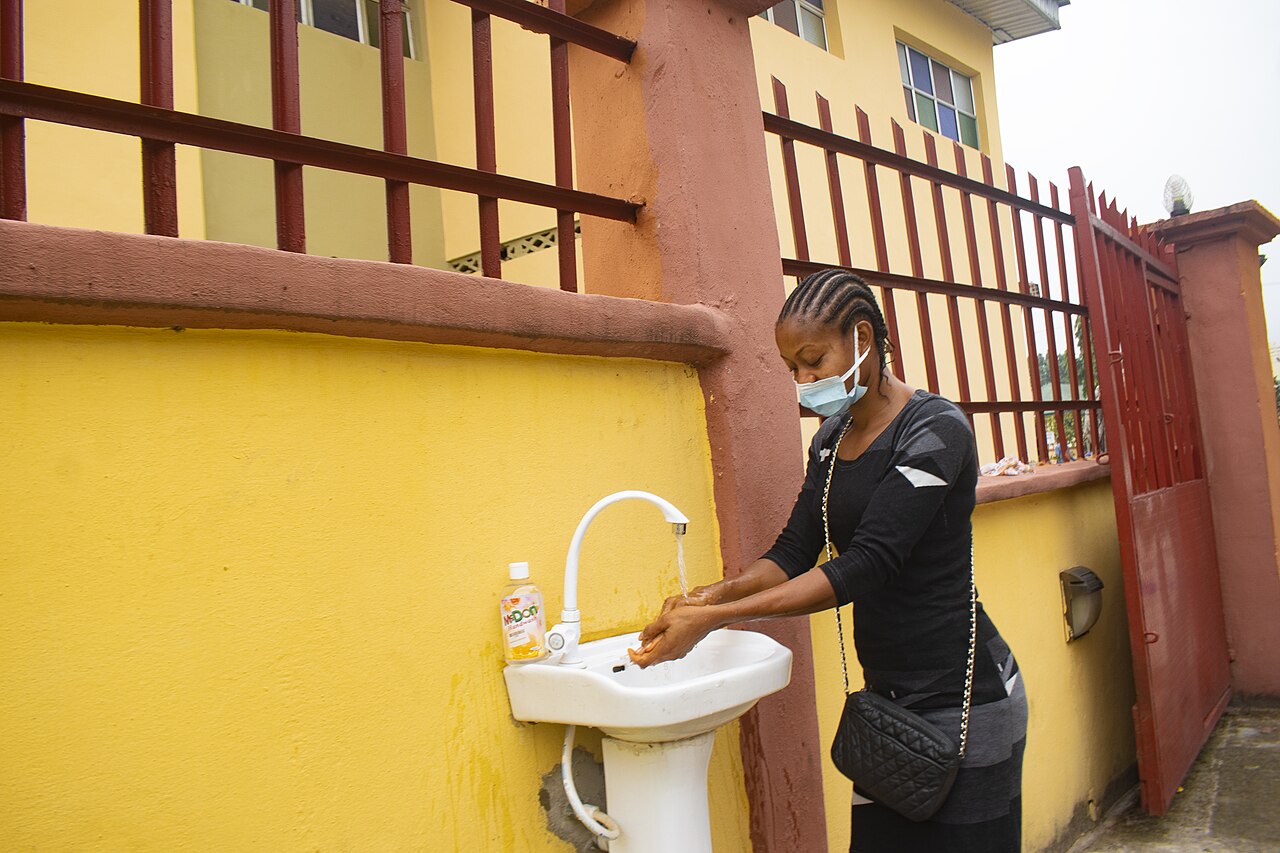
Today's clean water roundup travels from Nigeria, where the government says 185 local government areas are now free of open defecation, to Wisconsin, where 80 communities are lined up for help cleaning up their drinking water, and to northern Thailand, where officials are testing wells for arsenic and planning community filters. Each story is a step forward, and each comes with work still to do.
Nigeria: 185 local areas now free of open defecation
Nigeria's Minister of Water Resources and Sanitation, Prof. Joseph Terlumun Utsev, told reporters in Abuja on Monday, November 16, that 185 local government areas have attained Open Defecation-Free status, and that Jigawa and Katsina have reached that status statewide, as the News Agency of Nigeria reported. He spoke ahead of World Toilet Day on November 19 and the seventh anniversary of the Clean Nigeria: Use the Toilet Campaign, which was launched in November 2019.
The minister said President Bola Tinubu has signed an Executive Order on Open Defecation Free Nigeria by 2030, which Vice President Kashim Shettima is due to unveil on November 19. According to Daily Trust, newly certified local areas will also be recognized at that event. Utsev named sustainable financing, reliable data and stronger institutions as the priorities, and urged states, local governments and agencies to give sanitation its own line in their budgets.
He acknowledged that many local areas have yet to reach the status, and that certified communities must not slip back. He also stressed that public attitudes matter. “If the governors are doing their part and the Federal Government is doing its part, but we Nigerians do not have that attitudinal change to know that defecating in the open is a problem to ourselves, then there is no campaign,” he said, as quoted by Tribune Online.
Wisconsin: $371 million to clean up drinking water in 80 communities
Wisconsin Gov. Tony Evers announced on Monday, November 16, that 80 communities will receive more than $371 million through the state's Safe Drinking Water Loan Program, Wisconsin Public Radio reported. The projects tackle contaminants such as PFAS, the long-lasting “forever chemicals,” and manganese, with a special focus on small and disadvantaged communities.
The city of Marshfield is set to receive more than $11.1 million, including $7 million in principal forgiveness, to build a new treatment plant at its southside wellfield to remove PFAS. The village of Grantsburg is allocated more than $5.7 million to build a treatment facility for manganese at two of its wells, and the village of Hazel Green more than $1.6 million to replace unreliable water mains, according to the governor's announcement published by DrydenWire. The total includes nearly $13.2 million aimed at emerging contaminants like PFAS.
The list is still preliminary: communities have 30 days to ask for their priority scores to be reviewed, and the money will be awarded over the next year as costs come in. Bigger questions hang over future rounds. WPR notes that the president's proposed budget for the Environmental Protection Agency would cut the state revolving loan funds that pay for these projects by 90 percent, a cut that lawmakers from both parties in Congress have opposed.
Northern Thailand: testing wells for arsenic and planning community filters
Thailand's Department of Groundwater Resources has released results showing that nine of 133 groundwater samples taken in Chiang Mai and Chiang Rai provinces in 2026 contained arsenic above the safety standard of 0.01 milligrams per liter, while the other 124 did not, The Nation reported on Tuesday, November 17. The testing is part of ongoing monitoring in the Kok, Sai and Ruak river basins, where arsenic risks were identified earlier. The arsenic is believed to come from natural minerals in soil and rock that dissolve into groundwater.
The response is already under way. In 2025, inspectors checked groundwater and village water systems at 18 sites, and wells at four locations with high arsenic were cleaned and rehabilitated. For 2026 and 2027, the department is preparing to install community reverse osmosis filtration systems at 11 sites, along with a water supply system for large farm plots at one site, and to drill new observation wells near surface water sources to track how the arsenic moves.
Officials plan to work with local governments, provincial public health offices and village health volunteers so communities can monitor their own water and raise the alarm early. Until filters are in place, residents are advised to drink and cook with water that has passed through approved filtration or has been certified safe. Researchers still need to pin down exactly where the contamination comes from.
Why it matters
Safe water and sanitation are built one decision at a time: a signed order and a nationwide push to end open defecation in Nigeria, a treatment plant funded in a small Wisconsin town, filters planned for villages in northern Thailand. None of these stories is finished, but each shows governments measuring the problem honestly and putting money and people toward fixing it.
Learn more
- News Agency of Nigeria: Nigeria records 185 open defecation-free LGAs – FG
- Tribune Online: FG targets 2030 deadline as 185 LGAs attain open defecation-free status
- Wisconsin Public Radio: Wisconsin communities to receive $371M for drinking water projects
- DrydenWire: Grantsburg Receives $5.7 Million to Address Drinking Water Contamination
- The Nation: Arsenic exceeds limit in nine northern Thai groundwater samples
Sources: News Agency of Nigeria, "Nigeria records 185 open defecation-free LGAs – FG," 16 November 2026; Tribune Online, "FG targets 2030 deadline as 185 LGAs attain open defecation-free status," 16 November 2026; Daily Trust, "185 LGAs now open defecation-free – FG," 17 November 2026; Wisconsin Public Radio, "Wisconsin communities to receive $371M for drinking water projects," 16 November 2026; DrydenWire, "Grantsburg Receives $5.7 Million to Address Drinking Water Contamination," 17 November 2026; The Nation, "Arsenic exceeds limit in nine northern Thai groundwater samples," 17 November 2026.
How you can help
These organizations work on the same challenges as today's stories:
- WaterAid works with communities and governments in Nigeria to bring clean water, decent toilets and good hygiene to people who lack them.
- Clean Wisconsin uses science, law and policy to protect Wisconsin's water, including pushing for action on PFAS in drinking water.
- Planet Water Foundation has installed community water filtration systems at schools in Thailand since 2009, paired with hygiene education.
💬 0 replies
Inloggen to reply.