
Philippines Moves Toward Free School Meals, Lawmakers Unite Against Hunger in Nairobi and More
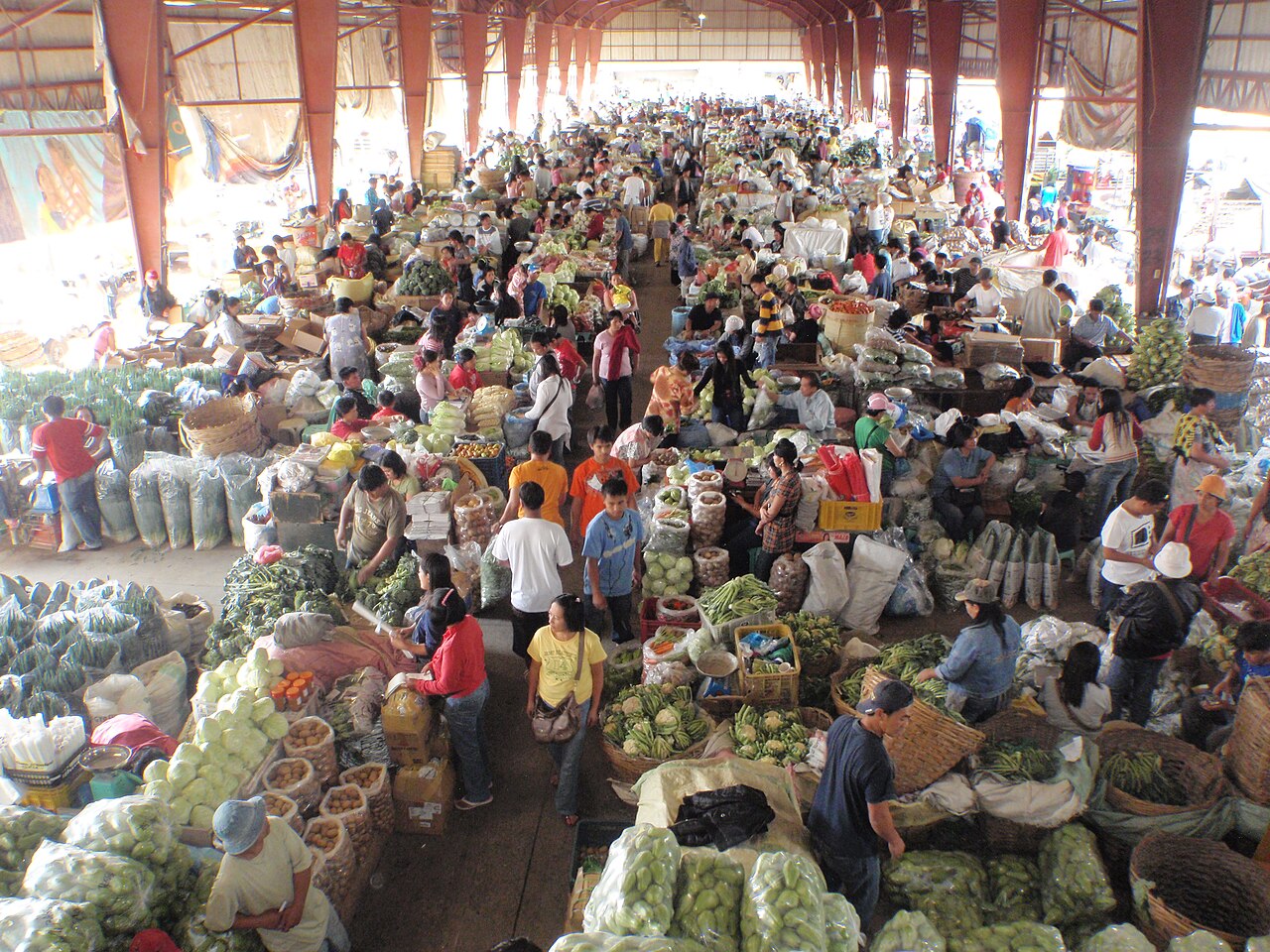
Today's food and nutrition roundup takes us from the Philippines, where lawmakers are close to guaranteeing free daily meals for young schoolchildren, to Nairobi, where legislators from 73 countries agreed on a plan to turn hunger pledges into laws and budgets. We also look at emergency food for displaced families in Sudan's Northern State and at a new round of Ukrainian food shipments bound for nine countries in Africa, Asia and Latin America.
Philippines: free school meals move closer to becoming law
Filipino schoolchildren are a step closer to free, nutritious meals every school day. As The Manila Times reported on 19 November, a bicameral conference committee of the Senate and House has approved the proposed National Children's Nutrition Act, reconciling Senate Bill 2272 and House Bill 9466. The measure would replace the 2018 law behind the current feeding program with a National Children's Nutrition Program.
Under the reconciled bill, every public school learner from kindergarten to Grade 3 would receive meals regardless of nutritional status, while undernourished learners in Grades 4 to 6 would get targeted feeding. Earlier reporting by The Manila Times said feeding would cover the full 180 to 200 school days a year, instead of the 120 days of past programs. The bill also reaches young children and pregnant adolescent learners, and lets government buy food for the program directly from Filipino farmers and fisherfolk. "No Filipino child should have to go to school hungry and unable to learn because of inadequate food," Senator Pangilinan said in a statement on Wednesday.
The need is large: citing national data, the paper reported that nearly one in three Filipino children under five is stunted. The bill still has to clear the remaining legislative steps before it becomes law, and Pangilinan urged both chambers not to delay.
Kenya: lawmakers from 73 countries agree a plan against hunger
The Third Global Parliamentary Summit against Hunger and Malnutrition closed in Nairobi on Tuesday, 17 November, the first time the gathering has been held in Africa. According to the Food and Agriculture Organization (FAO), more than 200 parliamentarians and officials from 73 countries took part, and they approved the Nairobi Call on Parliamentary Action against Hunger and Malnutrition. The summit was co-organized by FAO, the Parliament of Kenya and the Spanish Agency for International Development Cooperation.
The idea is simple: laws, budgets and oversight decide whether a child gets a school meal or a farmer can reach water, finance and markets. FAO's Abebe Haile-Gabriel asked every parliament to pick at least one law to introduce, one financing priority and one way to track spending and results. "Our challenge now is to connect what already exists, scale what works, and turn political commitment into implementation," he said. At the opening, Kenyan President William Ruto pointed to Kenya's school meals program as a way to improve child nutrition while giving local farmers reliable markets.
FAO notes that global hunger has fallen for three years in a row, yet 645 million people faced hunger in 2025 and Africa now has more hungry people than any other continent.
Sudan: emergency food for 30,000 displaced people in El Dabba
The World Food Programme (WFP) has agreed to provide one month of emergency food for 30,000 displaced people at the El Dabba camp in Sudan's Northern State, Radio Dabanga reported on 18 November. The state's humanitarian aid commissioner, Wail Mohammed Sharif, said he asked a visiting WFP delegation for help after food deliveries to the camp stopped. Local officials say 25 to 30 families fleeing Darfur and Kordofan arrive every day.
The help is welcome, but the wider picture is worrying. Dabanga reported that WFP's Ross Smith said rations will be cut by 70 percent from January for communities already facing famine, and by 50 percent for those at risk of it. UN News reported on 12 November that funding cuts have left an estimated 900,000 people in Sudan without WFP food assistance, and that the agency needs $520 million to reach 5.4 million people through April 2027.
Ukraine: 17,294 tons of food on the way to nine countries
Ukraine and WFP are delivering 17,294 tons of wheat, peas and vegetable oil to nine countries under the Food from Ukraine initiative, the Ministry of Agrarian Policy and Food said, as reported on 18 November by Ukrainian Shipping Magazine and UkrAgroConsult. Malawi will receive the largest shipment, 5,339 tons of peas and oil, followed by Kenya (3,520 tons of peas), Bolivia (3,060 tons of wheat), Pakistan (2,120 tons) and Somalia (2,045 tons of wheat). Smaller shipments go to Mozambique, Chad, Sudan and South Sudan.
Some cargo has already arrived, and the rest is in transit or being prepared. The food is planned to reach 2.2 million people in Malawi and up to 150,000 people in Pakistan. Since 2022, the initiative has bought 341,048 tons of food with WFP. "Even in conditions of a full-scale war, Ukraine continues to contribute to achieving the global goal of overcoming hunger by 2030," First Deputy Minister Denys Bashlyk said, as quoted by Ukrainian Shipping Magazine.
Why it matters
Today's stories show two sides of the fight against hunger. Laws like the Philippines' school meals bill and the Nairobi Call build lasting systems that feed children and support farmers year after year. Emergency food for families in Sudan and shipments from a country at war keep people alive now. Both depend on steady funding, and both work best when governments, aid agencies and ordinary people keep showing up.
Learn more
- The Manila Times: Bicam OKs proposed children's nutrition law
- The Manila Times (via Newswav): Bicam approves expanded school feeding program
- FAO: Parliamentary Summit against Hunger and Malnutrition ends with call for inclusive implementation
- FAO: Parliamentarians urged to turn hunger commitments into action as global summit opens in Kenya
- Radio Dabanga: UN WFP pledges month-long food aid for 30,000 displaced in Sudan's Northern State
- UN News: Aid is the 'only hope' for millions in Sudan, WFP chief warns
- Ukrainian Shipping Magazine: Ukraine plans to supply over 17,000 tons of food to nine countries
- UkrAgroConsult: Ukraine to send over 17 thsd tons of food to Africa, Asia and Latin America
Sources: The Manila Times, "Bicam OKs proposed children's nutrition law," 19 November 2026; The Manila Times via Newswav, "Bicam approves expanded school feeding program," 7 November 2026; FAO, "Parliamentary Summit against Hunger and Malnutrition ends with call for inclusive implementation," 18 November 2026; FAO, "Parliamentarians urged to turn hunger commitments into action as global summit opens in Kenya," 16 November 2026; Radio Dabanga, "UN WFP pledges month-long food aid for 30,000 displaced in Sudan's Northern State," 18 November 2026; UN News, "Aid is the 'only hope' for millions in Sudan, WFP chief warns, as funding cuts deepen hunger crisis," 12 November 2026; Ukrainian Shipping Magazine, "Ukraine plans to supply over 17,000 tons of food to nine countries as part of Food from Ukraine," 18 November 2026; UkrAgroConsult, "Ukraine to send over 17 thsd tons of food to Africa, Asia and Latin America," 18 November 2026.
How you can help
These organizations work on the issues in today's stories:
- Gawad Kalinga runs Kusina ng Kalinga, a school feeding program that serves meals to undernourished children in the Philippines.
- The Hunger Project works with communities and local leaders in Africa, Asia and Latin America on lasting, community-led solutions to hunger.
- Action Against Hunger treats and prevents child malnutrition in crisis zones, including Sudan.
- World Food Program USA raises support for the UN World Food Programme, which distributes emergency food in countries such as Malawi, Somalia and Pakistan.
💬 0 replies
Inloggen to reply.