
Philippine Senators Push to Feed More Schoolchildren, Nigeria Sets Climate-Ready School Standards and More
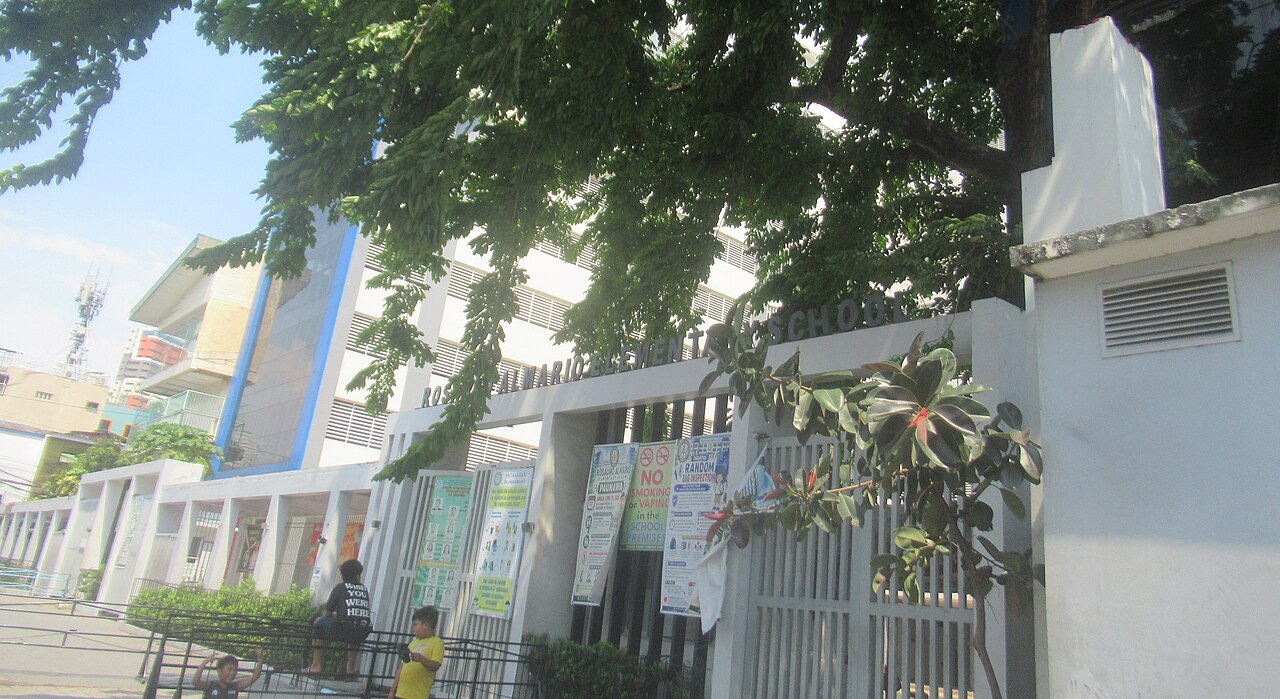
Today's education roundup travels from the Philippine Senate, where lawmakers are arguing for more school meals and catch-up classes, to northern Nigeria, where school builders are learning to design for floods and heat. We also visit Porto-Novo in Benin, a city that treats learning as a lifelong habit, and five schools in Antigua whose libraries keep growing.
Philippines: senators push for more school meals and catch-up lessons
During the Senate's debate on the Department of Education's 2027 budget on November 24, Senator Bam Aquino said the school-based feeding program should be first in line for any extra money, Rappler reported. The Senate finance committee has recommended 915.49 billion pesos for the department and its attached agencies, and it has already added 11 billion pesos to school feeding, bringing that program to 22.4 billion pesos. Aquino plans an amendment to raise it to 28.7 billion pesos. That would extend universal feeding to children from kindergarten to Grade 2, reaching about 1.8 million more students in 2027, with 124 feeding days at 30 pesos per meal.
Senators also pressed on learning recovery. Senator Joel Villanueva noted that 11 million students have been identified as needing remediation this school year, yet the Senate committee report sets no separate funding for the ARAL catch-up program. Aquino said unspent money from this year will carry it into 2027. "The main solution to the learning gap is really a remediation program," he said.
Classrooms are the other big gap. Senator Bong Go said the country is struggling to close a shortage of more than 140,000 classrooms. Data reviewed by lawmakers showed that of 21.45 billion pesos set aside for the public works department to build 6,000 classrooms, only 1.87 billion pesos, covering 533 rooms, had reached the contract award stage by late October, The Manila Times reported. The budget still has to pass the Senate and be reconciled with the House version.
Nigeria: new standards for schools built to withstand floods and heat
Nigeria's Universal Basic Education Commission (UBEC) has urged state governments to build public schools that can withstand flooding, erosion, extreme heat and water scarcity, Daily Trust reported on November 24. The call came at a two-day training in Kano for technical officers from UBEC and the state basic education boards of the northern zone, organized with UNICEF.
UBEC's executive secretary, Dr. Aisha Garba, whose remarks were delivered by the commission's director of physical planning, said the federal government has revised the national minimum standards for basic education buildings. The new guidelines cover how schools are planned, designed, built, supervised and maintained, and were developed with the Federal Ministry of Education, UNICEF, the World Bank and professional bodies. "School infrastructure must be designed to promote safety, thermal comfort, energy efficiency and accessibility for all learners," she said.
The review was prompted by unsafe classrooms, poor sanitation and buildings that are hard for some children to reach. Standards only help if they are followed, and the chairman of the Kano State basic education board called for more investment in continuous training for the technical officers who monitor school building projects.
Benin: Porto-Novo makes learning a lifelong habit
The UNESCO Institute for Lifelong Learning published a story on November 24 about Porto-Novo, Benin's capital, which joined the UNESCO Global Network of Learning Cities in 2025. Its programs reach adults and young people well beyond the classroom, in entrepreneurship, digital skills, health, social inclusion and the environment.
Constantine Toviegbe, a mother of two, once struggled to support her family by selling bread. Through a women's entrepreneurship project she trained in agricultural business, gained mentoring and now runs her own farm business. "We may finish growing up, but we never finish learning," she said, quoting a local saying, as she urged out-of-school women and girls to keep studying. Through the "Porto-Novo, Green City" project, residents learn while replanting trees and protecting the lagoon shores. Rodrigue Vidjannagni Houngbo Houssou, who left school in his final year of secondary education, now works as a rural development practitioner. An art therapy center also offers painting, music and pottery to people with disabilities.
Programs like these give a second chance to people the school system missed. The story highlights individual journeys and does not say how many residents the programs reach, which is the real test of how far they can go.
Antigua: school libraries keep growing for nearly 1,200 students
A literacy project serving 1,192 students at five schools in Antigua has entered a new phase, with new library signs installed, the Antiguan Trumpet reported on November 25. The work is run by the regional literacy nonprofit Hands Across the Sea with the Sandals Foundation, which put EC$54,607 into books and learning resources in June.
The schools are TOR Memorial School, St. Michael's Primary, Urlings Primary, Parham Primary and Princess Margaret Secondary, Antigua News reported in June. Each receives a collection chosen for its students' reading levels. "We help create or rejuvenate school libraries, train and support literacy champions on the ground, and work alongside educators to ensure resources remain active, relevant, and impactful long after delivery," said Ben Engle, the group's executive director. Books are only a start; libraries need trained people and steady support to stay in use.
Why it matters
Each of these stories is about the conditions that make learning possible: a meal so a child can concentrate, a classroom that stays safe in a flood or a heat wave, a library with the right books, and a second chance for adults who left school early. None of them is finished, but each shows people working to keep the door to learning open.
Learn more
- Rappler: Senate prioritizes feeding program in push for higher 2027 DepEd budget
- The Manila Times: Go presses DepEd on classroom backlog
- Daily Trust: UBEC urges states to adopt climate-resilient school designs
- UNESCO Institute for Lifelong Learning: How lifelong learning transformed Constantine's life in the UNESCO Learning City of Porto-Novo
- Antiguan Trumpet: Literacy Project Reaches Nearly 1,200 Students Across Five Schools
- Antigua News: Sandals Foundation and Hands Across the Sea Expand Literacy Support to More Than 1,100 Students in Antigua
Sources: Rappler, "Senate prioritizes feeding program in push for higher 2027 DepEd budget," 25 November 2026; The Manila Times, "Go presses DepEd on classroom backlog," 26 November 2026; Daily Trust, "UBEC urges states to adopt climate-resilient school designs," 24 November 2026; UNESCO Institute for Lifelong Learning, "How lifelong learning transformed Constantine's life in the UNESCO Learning City of Porto-Novo," 24 November 2026; Antiguan Trumpet, "Literacy Project Reaches Nearly 1,200 Students Across Five Schools," 25 November 2026; Antigua News, "Sandals Foundation and Hands Across the Sea Expand Literacy Support to More Than 1,100 Students in Antigua," 9 June 2026.
How you can help
These organizations work on the issues in today's stories:
- Gawad Kalinga runs Kusina ng Kalinga, a school feeding program that serves meals to children in Philippine public schools.
- Street Child helps out-of-school children in northeast Nigeria get back into learning.
- Plan International Benin works with girls and young people in Benin on education, skills training and equal opportunity.
- Hands Across the Sea builds and supports school and community libraries to raise children's literacy in the Eastern Caribbean.
💬 0 replies
Inloggen to reply.