
UNESCO Calls Teacher Training a Right, Autistic Learners Reach South Africa's Robotics Finals and More
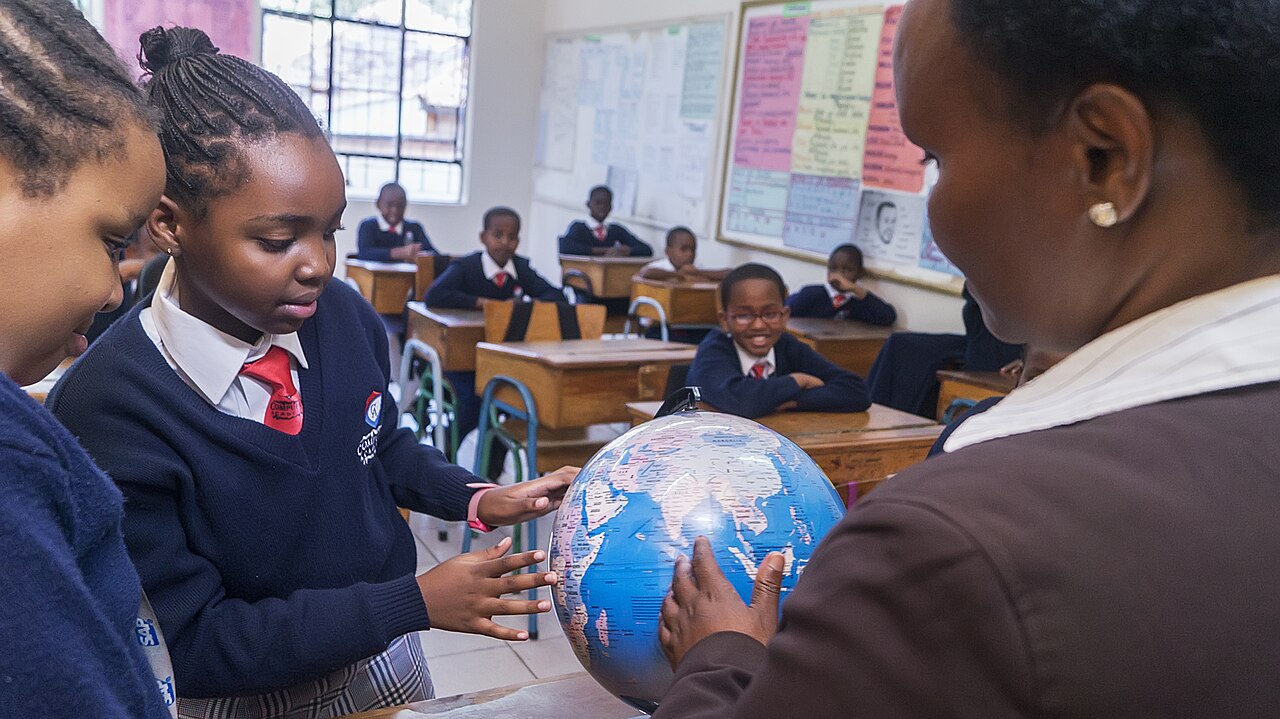
Today's education roundup starts in Addis Ababa, where a new global report argues that every teacher deserves to keep learning throughout their career. From there we go to Mitchells Plain in South Africa's Western Cape, where autistic learners at a public special needs school have reached the country's national robotics finals, and to Kayunga District in Uganda, where five schools have new classrooms and a clear list of what they still need.
Global: UNESCO says ongoing teacher training should be a right
On 23 November, UNESCO and the International Task Force on Teachers for Education 2030 launched the second Global Report on Teachers at the 15th Teacher Policy Dialogue Forum in Addis Ababa, Ethiopia. The forum is co-hosted by the African Union Commission and runs at the African Union's headquarters until 27 November. The report, titled Advancing teacher professional development through lifelong learning, calls for professional development to be recognized as a right for every teacher, from early childhood and primary classrooms to technical colleges, adult education and refugee and emergency settings.
The report finds that support for teachers is patchy. Only 45% of countries with complete data require continuing professional development across all levels from pre-primary to secondary, and access is especially unequal for teachers in rural, underserved and crisis-affected places. Too often, it says, training is a one-off workshop rather than mentoring, peer collaboration and learning from everyday classroom practice. It recommends six actions, including protecting teachers' working conditions so they can learn, tailoring training to career stages and new challenges such as AI, and giving teachers a real voice in research and policy.
"Governments can make that possible by protecting time for professional learning in the working day and giving teachers a say in how that time is used," said Carlos Vargas, who leads UNESCO's teacher development section and the Teacher Task Force secretariat. The challenge is large: the first edition of the report, in 2024, found the world needs 44 million additional teachers by 2030, and better support is part of how countries can attract and keep them.
South Africa: autistic learners reach the national robotics finals
At Beacon School, a public school in Westridge, Mitchells Plain, for learners with severe or profound intellectual disability and learners with autism, a small set of LEGO bricks has opened a new door. GroundUp reported on 24 November that teacher Zelia van Rooyen introduced LEGO tinkering kits to her class in 2024, after the school received the kits through its work with the Six Bricks playful learning approach. When the Department of Basic Education announced that coding and robotics would become part of the curriculum in mainstream schools, she signed up for the teacher training too.
Her learners now build and program robots that navigate obstacle courses. Beacon teams reached the national round of the World Robot Olympiad in both 2025 and 2026, and van Rooyen says Beacon was the only special needs school from the Western Cape to compete. This year two 15-year-old autistic learners went on to the nationals in Pretoria after the school took first and second place at the provincial competition in Paarl.
"I was a bit nervous when we went to our first competition because my kids would meet other learners from mainstream schools and I didn't know how they would interact. But I was pleasantly surprised how they got along with everyone," van Rooyen told GroundUp. The story is a reminder that inclusive education works best when teachers get training and materials, and when competitions and programs open their doors to every kind of learner.
Uganda: new classrooms for five Kayunga schools
In Kayunga District, five schools each received a new three-classroom block, a combined investment of Shs700 million under a government grant, the Nile Post reported on 22 November. The schools are Ndeeba Secondary School, Kisombwa Church of Uganda Primary School, Nangabo Church of Uganda Primary School, Ndeeba Church of Uganda Primary School and Buyungiri Roman Catholic Primary School. The new rooms are meant to ease crowded classes and give learners a better place to study.
School leaders welcomed the classrooms and were frank about what is still missing. "Much as we appreciate the new classroom block, our school still lacks a pit latrine and is understaffed," said Andrew Kwete, head teacher of Nangabo Church of Uganda Primary School, who asked the government for more support. District chairperson Andrew Muwonge said the district's 160 government primary schools face large infrastructure needs, with sanitation among the biggest, and appealed for more funding. Classrooms are a start; toilets and enough teachers are what make them work.
Why it matters
Each of these stories comes back to the people and conditions that make learning possible. A global report asks governments to give teachers time and support to keep growing. A teacher in the Western Cape shows what that support can unlock for children who are often overlooked. And a district in Uganda shows that new buildings help most when they come with sanitation and enough trained teachers to fill them.
Learn more
- UNESCO: New UNESCO global report: Lifelong teacher professional development must be a right
- African Union: 15th Teacher Policy Dialogue Forum
- GroundUp: Mitchells Plain special needs learners excel to national robotics olympiad
- Nile Post (via allAfrica): Five Kayunga Schools Receive Major Upgrade With Shs700m Grant
Sources: UNESCO, "New UNESCO global report: Lifelong teacher professional development must be a right," 23 November 2026; African Union, "15th Teacher Policy Dialogue Forum," 23 November 2026; GroundUp, "Mitchells Plain special needs learners excel to national robotics olympiad," 24 November 2026; Nile Post, "Five Kayunga Schools Receive Major Upgrade With Shs700m Grant," 22 November 2026.
How you can help
These organizations work on the issues in today's stories:
- VVOB – education for development works in close partnership with ministries of education in Africa, Asia and South America to strengthen the quality of their education systems.
- Autism South Africa supports autistic people and their families across South Africa throughout their lives, including training and resources.
- Building Tomorrow works with communities in Uganda to help every child gain foundational literacy and numeracy skills.
💬 0 replies
Inloggen to reply.