
Back to the Wetlands: A Rescued Fishing Cat Returns to the Wild in Bangladesh
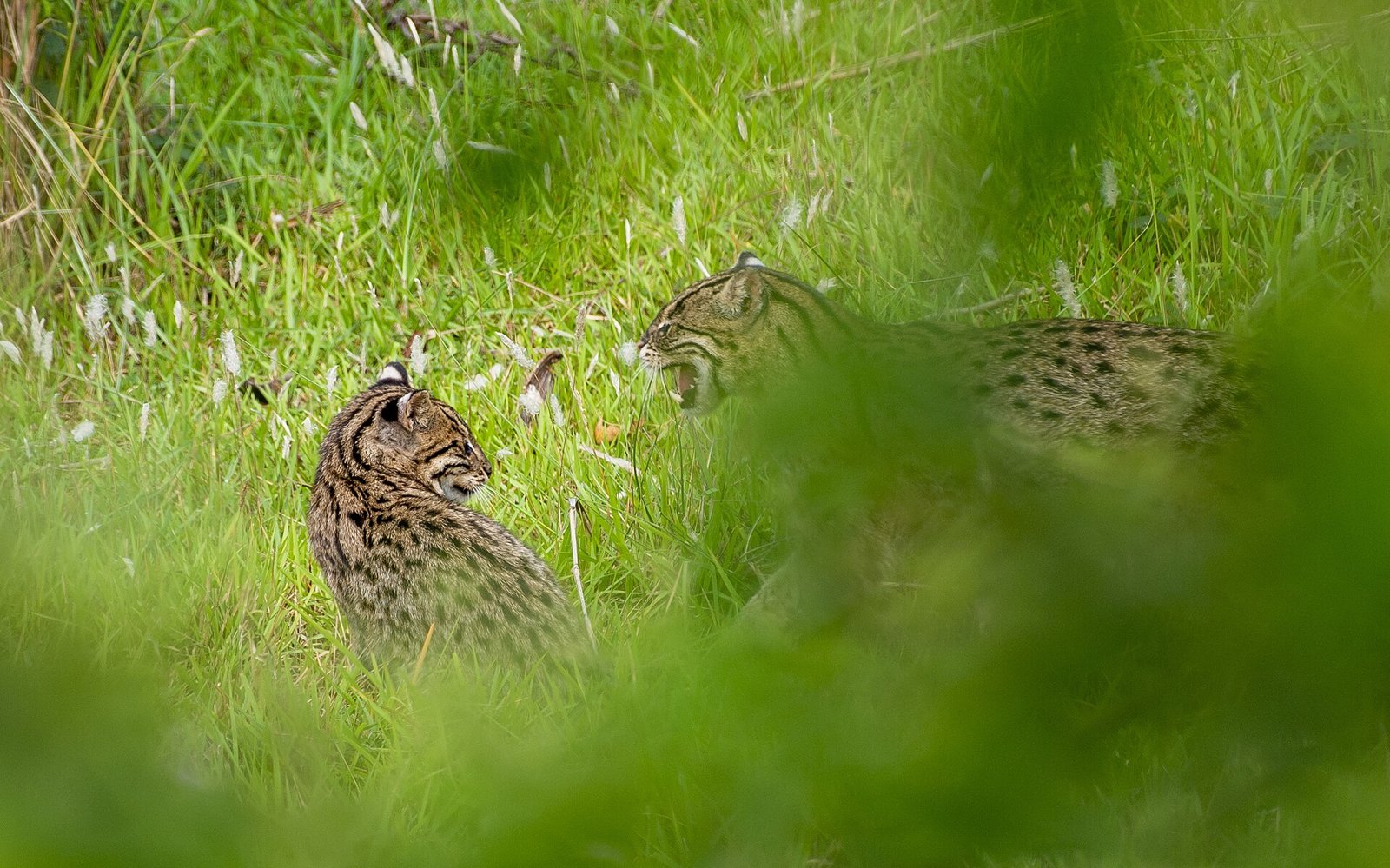
When the Bangladesh Forest Department rescued a male fishing cat in February 2026, few expected him to live. His jaw was dislocated and he could not feed himself. Months later, he is back in the wild, wearing a satellite collar, according to Mongabay.
Show moreShow less
When the Bangladesh Forest Department rescued a male fishing cat in February 2026, few expected him to live. His jaw was dislocated and he could not feed himself. Months later, he is back in the wild, wearing a satellite collar, according to Mongabay.
Fishing cats are among the larger small wildcats, at home in wetlands where they hunt in the water. The IUCN estimates there may be as many as 7,500 in the wild. In Bangladesh, roughly 95 percent of their range lies outside protected areas, which means they live close to people, and conflict with fish and duck farmers has often ended badly for the cats.
A long recovery
The cat was taken to the Jankichara Wildlife Rescue and Rehabilitation Centre, run by the nonprofit Creative Conservation Alliance (CCA). "His jaw was dislocated, most likely from being beaten by people, and he could not feed himself," Caesar Rahman, CEO of the CCA, told Mongabay. "He was badly malnourished and weighed barely five kilograms. We had very little hope that he would survive."
After weeks of assisted tube feeding and veterinary care, he grew to 12 kilograms. To ease his return, the team kept him in a soft release enclosure for more than eight weeks at the Ooterbhag and Indanugger Tea Estate, which borders a large freshwater wetland. Satellite tracking will now show how he settles.
An honest note of hope
Not everyone calls it rewilding. Muntasir Akash, a zoologist at the University of Dhaka who was not involved, described it as a conflict translocation, but added, "Every life matters," and called it another milestone in spatial ecology studies in Bangladesh.
Rahman sees a wider opportunity. "There are at least 135 tea estates in the northeastern part of Bangladesh," he said. "It is still early days, but this could become a useful model for conservation in a densely populated region."
Why it matters
Coexistence is built one patient act at a time: a rescue, a careful recovery, a landowner willing to share space. If tea estates can become safe corridors for wildlife, people and fishing cats may find a gentler way to live side by side.
Learn more
- Read the Mongabay report.
- Learn about protecting wetlands, the homes fishing cats depend on.
Source: Mongabay, "Fishing cat rescue-and-release offers potential model for conservation in Bangladesh," 29 October 2026.
💬 0 replies
Sign in to reply.