
After Borneo's Worst Fires in Years, Farmers Learn to Grow Food Without Burning the Land
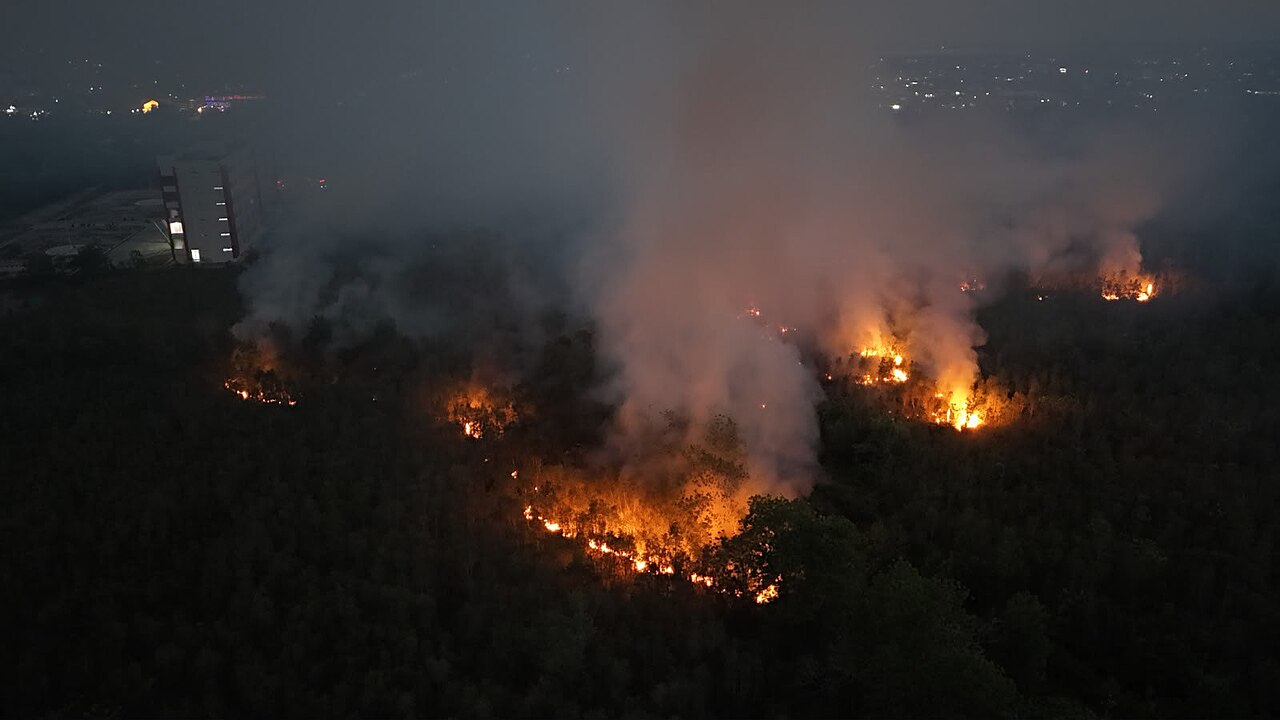
This year, fires swept across huge stretches of the island of Borneo, in Indonesia. Katarina Rina, a farmer, watched her dog fruit garden, one of her family's main sources of income, burn completely. "It has never been this bad," she told an environmental news site. Many farmers here have traditionally cleared land with fire. Now local groups are helping them farm without it, and you can back village fire teams through Planet Indonesia, at planet indonesia dot org. A sixty six year old farmer named Yadi stopped burning and harvested 62 kilos of patchouli in June. "When the land is burned, the fertility doesn't last long," he says. Unburned soil, he has found, stays fertile longer.
Katarina Rina, 53, farms in Hulu Sungai subdistrict, in the hills of the Gunung Naning protected forest in Ketapang district, West Kalimantan. "We have had fires before, but they were quickly controlled, it has never been this bad," she told Mongabay. "This time the fires spread into the forests and farmland. It was very traumatizing." Around 684,000 hectares burned in Kalimantan, the Indonesian part of Borneo, between January and September, 36% of the national total. By September, Indonesia's Ministry of Health said some 12.5 million people had been affected by fire or smoke.
Across Indonesia, the Nusantara Atlas monitor mapped about 1.9 million hectares affected by fire from January to September, 38% more than in the same months of 2019, the worst year in its records. Scientists with the World Weather Attribution group found that a strong El Niño cut seasonal rainfall from July to October by about half, while climate change made the seasonal heat about 1.6°C hotter and the fire-prone conditions about three times more likely, AFP reported. They also pointed to deforestation and peatland drainage as major contributors.
Rina belongs to a farmers' group trained and equipped by Planet Indonesia in climate-smart farming, which aims to reduce the use of fire and helps families plant fruit and native trees on fallow land. "It's difficult to ask farmers to change practices that have been passed down for generations without first showing them that the alternatives actually work," field officer Hanna Runtu told Mongabay. In Central Kalimantan's Seruyan district, the community organization Gawi Bapakat, part of the Indonesian group Kaleka, gives farmers in six Indigenous Dayak villages hand tractors, seedlings and training in making organic fertilizer instead of relying on ash. It also buys patchouli grown by member farmers and has set up a patchouli oil distillery. Yadi, from the village of Tumbang Gugup, says one planting can give up to four harvests.
What still needs doing: farmers say they cannot afford to switch without steady help. "For traditional farmers, the cost of changing from swidden agriculture is very big," said University of Indonesia anthropologist Sofyan Ansori. Gawi Bapakat director Anindya Hadi said budget cuts have limited plans to expand the program: "Communities are ready to adopt fire-free practices." Meanwhile, in West Kalimantan, village fire crews have worked long shifts putting out fires and checking burned ground for hidden embers, Planet Indonesia reported in September.
Who is working on this
- Planet Indonesia: trains farmers in West Kalimantan, including Katarina Rina's group, in climate-smart farming that reduces the use of fire, and has documented how village fire crews there are responding to this year's fires.
- Kaleka: its community organization Gawi Bapakat runs a fire-free farming program in six Dayak villages in Seruyan, Central Kalimantan, where Yadi farms.
- SIAR: a West Kalimantan research group mapping this year's fire hotspots against the past ten years of burning.
Learn more
- Mongabay: As Indonesia burns, communities look to fire-free agriculture for relief
- Nusantara Atlas: Indonesia's 2026 fires: 1.9 million hectares affected by fire through September
- Phys.org (AFP): El Niño mostly to blame for Indonesian wildfires: Research
- Planet Indonesia: The Fire You Can't See
This story was featured in today's Humanitarian Explorer podcast. Sources: Mongabay, "As Indonesia burns, communities look to fire-free agriculture for relief," 25 November 2026; Nusantara Atlas, "Indonesia's 2026 fires: 1.9 million hectares affected by fire through September," 2026; AFP via Phys.org, "El Niño mostly to blame for Indonesian wildfires: Research," 13 November 2026; Planet Indonesia, "The Fire You Can't See," 23 September 2026.
How you can help
These groups are helping Borneo's farmers and villages prevent and fight fires.
- Planet Indonesia: helps West Kalimantan farmers move away from burning their land.
- Kaleka: works with Dayak farmers in Central Kalimantan to farm without burning.
- SIAR: maps where fires burn so prevention can focus on the right places.
💬 0 replies
Sign in to reply.