
COP31 Ends Without a Deal, T'boli Farmers Test Their Soil and Colombo Turns to Its Wetlands
Today's environment news runs from a conference hall in Türkiye to a lake in the southern Philippines. The UN climate summit closed without a deal, while countries meeting in Geneva agreed on new steps to manage harmful chemicals. In Mindanao, Indigenous farmers measured how much soil their hillsides are losing, and in Sri Lanka, a sudden flood has Colombo looking again at the wetlands that protect it.
Türkiye: COP31 ends without a climate pact
The UN climate conference in Antalya, COP31, ended on Sunday, 22 November, without a final agreement, UN News reported. After two weeks of talks and two days of overtime, governments could not settle their differences over fossil fuels. COP31 President Murat Kurum, Türkiye's environment minister, told delegates: "I understand that there is no agreement on this text. For that reason, these decisions have not been adopted." UN News called it the longest-running UN climate summit on record.
Several countries objected to the final draft. The European Union said a text with no reference to moving away from fossil fuels was "unconscionable," Panama rejected the outcome, and the Marshall Islands said the deal failed countries on the front lines of climate change. UN Secretary-General António Guterres said he was "deeply disappointed," but added: "There may be no consensus in the negotiating room. There is no ambiguity in the science."
There were some steps forward. UN Climate Change Executive Secretary Simon Stiell pointed to an agreement on a just transition and to initiatives on electrification, resilience and investment. The unanswered questions now move to COP32 in Addis Ababa, Ethiopia.
Switzerland: countries agree on next steps to curb harmful chemicals
In Geneva, the first International Conference of the Global Framework on Chemicals closed with new measures to put the framework into practice, the UN Environment Programme (UNEP) announced on 21 November. More than 1,200 participants took part, from governments, civil society, business, science and international organizations.
The conference provisionally adopted a first set of global indicators to track progress toward the framework's targets. It also launched two global programmes: one to strengthen national laws and institutions for managing chemicals and waste, and one to work with industry, starting with construction, electronics, healthcare and textiles. The fund that helps developing countries carry out the framework was extended until 31 December 2035.
The framework was adopted in Bonn in 2023, and most of its 28 targets are due by 2030. "There is no time to lose between now and 2030," said UNEP Executive Director Inger Andersen, adding that what matters now is turning these commitments into real action.
Philippines: T'boli farmers measure the soil they are losing
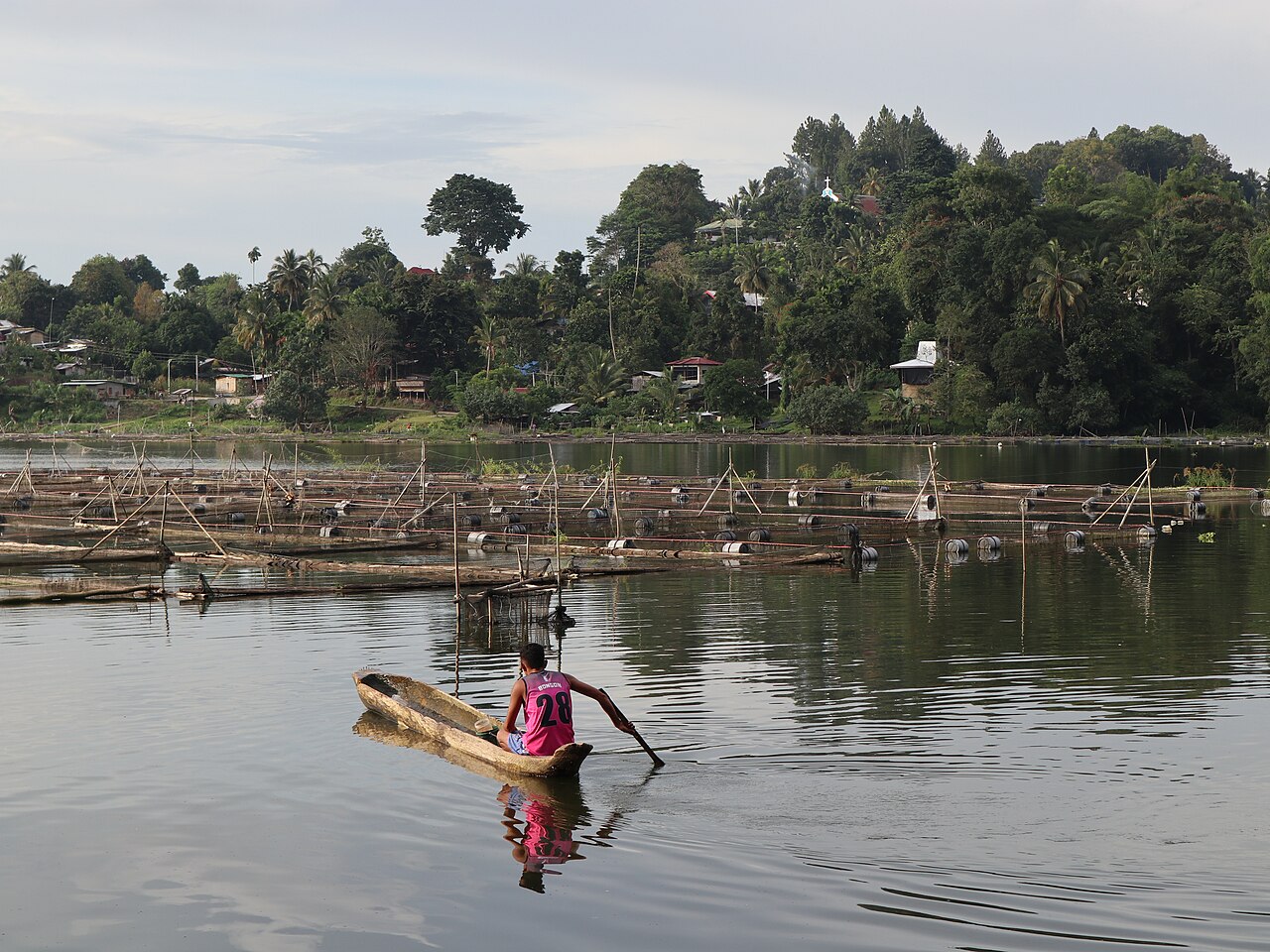
Around Lake Sebu on the island of Mindanao, Indigenous T'boli farmers noticed their soil changing color and their cassava growing smaller. They also wondered why fish kept dying in the lake below their farms. Mongabay reported on 20 November how they set out to test their suspicion that erosion from hillside corn farms was filling the lake with silt.
With help from MASIPAG, a farmer-led network of organizations and scientists, the Lem Bulul Farmers Association set up two test plots on sloping land: one with traditional corn and one with genetically modified corn sprayed with glyphosate herbicide. From March to July 2025, the traditional plot lost 7.59 cubic meters of soil per hectare, while the conventional plot lost 39 cubic meters, more than five times as much. A retired University of the Philippines researcher who was not part of the study said removing the plants that hold topsoil on steep slopes leads to erosion.
It is a small, community-run study, but the farmers hope it will support local rules limiting glyphosate near waterways. "Farmers are our lead scientists because they know their land," said MASIPAG's Mindanao coordinator, Leo XL Fuentes.
Sri Lanka: a flash flood puts Colombo's wetlands back in focus
On 6 November, a 129-millimeter downpour flooded parts of Colombo within minutes, stranding commuters and submerging vehicles. Mongabay reported on 21 November that the rain fell at more than 120 millimeters an hour, while the city's storm water system, about a century old, was designed for 30.
The city's wetlands are part of its natural defense. Mongabay reported that the Colombo Wetland Complex holds back about 37 percent of the rainwater that comes into the city, but many wetlands have been filled for development or overrun by invasive pond apple trees, which reduces how much water they can absorb. Colombo is an accredited Ramsar Wetland City, and experts quoted in the report called for restoring wetlands and building a dedicated adaptation and resilience fund.
Work has begun. After the flood, authorities identified 60 key locations with blocked drains and waterways, and the Colombo Municipal Council says it plans new drainage designed for more than 100 millimeters of rain an hour. Weather officials also noted that Sri Lanka does not yet have an operational Doppler weather radar to give earlier warnings.
Why it matters
Global agreements matter, and today one stalled while another moved forward. But the stories from Lake Sebu and Colombo show that protecting land and water also happens close to home: farmers measuring their own soil, and cities restoring the wetlands that keep their streets dry. Progress depends on both, and on people who keep showing up.
Learn more
- UN News: COP31 ends without climate pact as UN chief warns there is 'no ambiguity in the science'
- UNEP: Global chemicals conference adopts measures to track progress, accelerate action on chemicals and waste
- Mongabay: Philippine corn farmers investigate links between chemical farming and soil erosion
- Mongabay: Extreme rainfalls flood Sri Lanka's coastal city as wetlands, drains vanish
Sources: UN News, "COP31 ends without climate pact as UN chief warns there is 'no ambiguity in the science'," 22 November 2026; UNEP, "Global chemicals conference adopts measures to track progress, accelerate action on chemicals and waste," 21 November 2026; Mongabay, "Philippine corn farmers investigate links between chemical farming and soil erosion," 20 November 2026; Mongabay, "Extreme rainfalls flood Sri Lanka's coastal city as wetlands, drains vanish," 21 November 2026.
How you can help
These groups work on the issues behind today's stories:
- Climate Action Network is a worldwide network of civil society groups pressing governments for stronger climate action at the UN talks and at home.
- IPEN is a global network of public interest groups working to reduce and eliminate harmful chemicals and pollutants.
- MASIPAG is a Philippine farmer-scientist partnership that supports farmers' own research and helped the T'boli farmers at Lake Sebu run their soil study.
- Wetlands International works to conserve and restore wetlands around the world, the natural sponges that help protect communities from floods.
💬 0 replies
Sign in to reply.