
Nigeria's Malaria Vaccine Reaches a Quarter-Million Children, Karachi Opens a Sponge Park and More
Today's roundup travels from a park in Karachi to a summit in Paris, a school in the Jordan Valley, village clinics in Nigeria's Niger Delta and the vast wild country of northern Mozambique. Each story shows people building something that lasts, and each comes with an honest…
Show moreShow less
Today's roundup travels from a park in Karachi to a summit in Paris, a school in the Jordan Valley, village clinics in Nigeria's Niger Delta and the vast wild country of northern Mozambique. Each story shows people building something that lasts, and each comes with an honest look at the work still ahead.
💧 Clean Water: Karachi opens Pakistan's first sponge park
Karachi on Thursday inaugurated what officials describe as Pakistan's first experimental "sponge park," at Jamali Park in the city's Gulberg Block 2, The Express Tribune reported. Instead of letting rain rush through drains and out to sea, the park is designed to catch it, clean it and put it back to use. It also captures water from the ablution facilities of a nearby mosque.
The water passes through locally built filters laid beneath the park's channels, with layers of gravel, sand, silica, activated carbon, biochar and zeolite that trap debris, absorb pollutants and reduce some heavy metals. It is then stored underground or in tanks and used to water the park's trees and plants. WWF-Pakistan built the project over six months with the Gulberg Town Municipal Corporation and private partners. Naim Ashraf Raja of Pakistan's climate change ministry told the paper that underground freshwater has been heavily drawn down and needs to be replenished through natural processes.
It is a small start for a city of millions that faces both flooding and water shortages. The paper notes that results will depend on soil, rainfall and regular maintenance, and that the model could spread to other parks if the experiment works.
How you can help: WaterAid Pakistan works with communities across the country on safe water, sanitation and hygiene.
🌾 Food and Nutrition: A global push for school meals that can weather shocks
At the ninth Paris Peace Forum this week, world leaders put children at the center. The Children First Declaration, launched on November 10 at the forum's Child Summit, sets a goal of halving major shortfalls in child wellbeing by 2045, and reminds readers that one in four children under five lives in severe food poverty.
Alongside it came a Call to Action for Resilient School Meals, backed by the School Meals Coalition and its co-chairs France, Brazil, Finland and Kenya. In a statement on November 11, Elizabeth Yee of the Rockefeller Foundation noted that more than 70 countries have made commitments to expand their school meal programs, even as aid budgets shrink. "As climate change and conflict make food shocks more frequent, school meals are a safety net against hunger," she said, adding that well-designed programs also give smallholder farmers a reliable market.
Declarations do not feed children by themselves. The real test is whether governments and their partners now fund these programs and keep them running when budgets are tight.
How you can help: Mary's Meals serves daily school meals to children in some of the world's poorest communities.
📚 Education Access: Jordan launches a €20 million push to help children catch up
On November 11, Jordan's Ministry of Education and Human Resources Development, the European Union and UNICEF launched the Schools Teaching for Learning Recovery program at Jabal Al-Shamali School in the Southern Jordan Valley, UNICEF announced. The €20 million, EU-funded initiative will work in 300 public schools across six education directorates from 2026 to 2029.
The aim is to help 20,000 children improve their reading and 40,000 strengthen their math. Teachers will be trained to spot learning gaps and adapt lessons, including for children with disabilities, while schools work more closely with parents to tackle absence and keep at-risk students from dropping out. The program builds on earlier reading recovery work and a math pilot in 12 schools that showed gains.
"When children struggle to read or understand mathematics, each new lesson can become harder to follow," said Marc Rubin, UNICEF Representative to Jordan. "With the right support, they can catch up and regain confidence." Lasting change will depend on carrying these methods into many more of Jordan's classrooms after the program ends.
How you can help: Save the Children supports children's learning and wellbeing in Jordan, including refugee children.
🩺 Health and Wellness: Nigeria's malaria vaccine reaches a quarter-million children
Two years after the world's first malaria vaccines arrived in Nigeria, an AFP report published November 12 finds slow but real progress. Almost a quarter-million children are now fully vaccinated and 1.8 million doses have been given. In Bayelsa state, the health group PATH reports an 18 percent drop in the rate of children under five who have malaria at any given time.
Health workers give the four doses over a child's first 15 months, sometimes by boat or on home visits to families who cannot travel. "We have not recorded anything like the death of a child," Elizabeth Ogisi, director of primary health care for Ogbia, told AFP of the time since the vaccine arrived. One young mother said her baby had not had malaria once, sparing her the cost of medicine.
The scale of the challenge is huge. Malaria killed nearly 200,000 Nigerians in 2024, and the vaccine is so far being given in only four of the country's 36 states. It also does not give full protection, so bed nets and preventive medicines still matter.
How you can help: Malaria Consortium works with Nigerian health authorities to prevent and treat malaria in children.
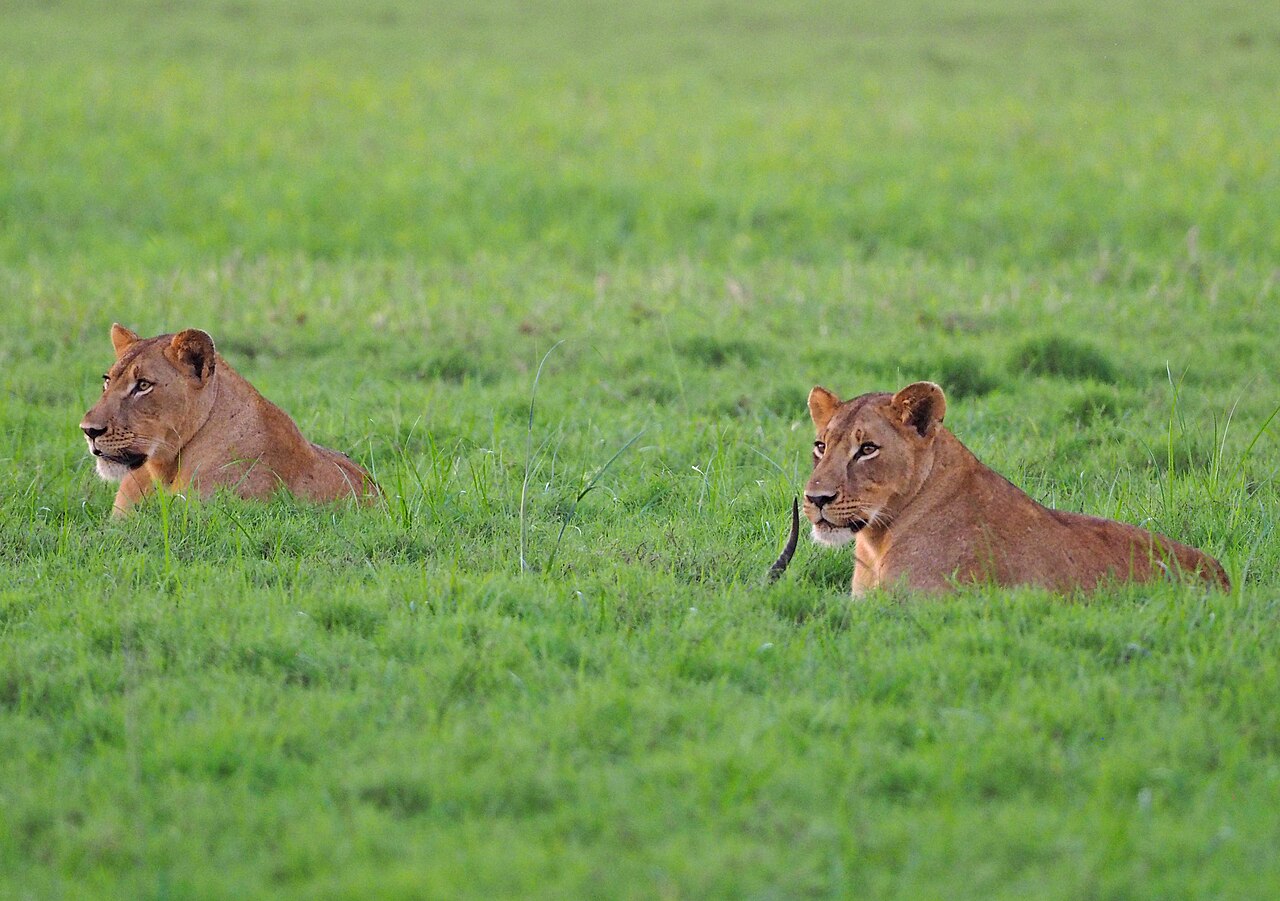
🌳 Healthy Environment: A lifetime award for protecting Mozambique's lions
Conservationist Colleen Begg, co-founder of the Niassa Carnivore Project, received the 2026 Prince William Award for Conservation in Africa at the Tusk Conservation Awards in London on Wednesday, Club of Mozambique reported. The lifetime achievement award honors more than two decades of work in Mozambique's Niassa Special Reserve, a protected area of about 42,000 square kilometers.
The project, founded in 2003, works with local communities, Mozambican authorities and tourism operators to protect lions, leopards, spotted hyenas and African wild dogs. It helps families live more safely alongside big cats, including by restoring traditional raised houses, and more than 100 Mozambicans work for it, about 85 percent from communities inside the reserve. Begg summed up her approach simply: "Conservation is not a solo effort."
The work comes at a real cost. In April 2025, insurgents attacked the project's headquarters and killed four rangers; Begg and her team returned to support the families and rebuild. Insecurity and poaching remain serious threats in northern Mozambique.
How you can help: Tusk, the charity behind the awards, supports community-led conservation projects across Africa.
Why it matters
None of today's stories is a finish line. A single park, a summit declaration, a school program, a vaccine in four states and one reserve's guardians are all beginnings. But each shows the same thing: when communities, governments and partners commit to steady, practical work, children learn, eat, stay healthy and grow up in a living landscape.
Learn more
- The Express Tribune: Karachi inaugurates Pakistan's first sponge park to conserve rainwater
- Paris Peace Forum: Children First Declaration
- The Rockefeller Foundation: Statement on the Call to Action for Resilient School Meals
- UNICEF Jordan: €20 million learning recovery programme in 300 schools
- AFP via Uganda Broadcasting Corporation: Nigeria slowly rolls out malaria vaccine
- Club of Mozambique: Colleen Begg receives Prince William Award for Conservation in Africa
Sources: The Express Tribune, "Karachi inaugurates Pakistan's first sponge park to conserve rainwater," 12 November 2026; Paris Peace Forum, "Children First Declaration," 10 November 2026; The Rockefeller Foundation, "Statement From Elizabeth Yee, Executive Vice President of Programs, on the Call to Action for Resilient School Meals," 11 November 2026; UNICEF Jordan, "Ministry of Education and UNICEF launch €20 million learning recovery programme in 300 schools in Jordan, with EU support," 11 November 2026; AFP via Uganda Broadcasting Corporation, "Jab by jab, house by house, Nigeria slowly rolls out malaria vaccine," 12 November 2026; Club of Mozambique, "Mozambique: Niassa Carnivore Project co-founder Colleen Begg receives Prince William Award for Conservation in Africa at 2026 Tusk Awards," 12 November 2026.
💬 0 replies
Sign in to reply.