
America's Rarest Fish Nearly Doubles, the Solomon Islands Opens a Safer Water Plant and More
Today's roundup travels from a Pacific island town to a desert spring in Nevada. In the Solomon Islands, a new treatment plant is making tap water safer. At the COP31 climate talks, a Japanese farmers' cooperative has put money behind small farmers around the world. Malawi has…
Show moreShow less
Today's roundup travels from a Pacific island town to a desert spring in Nevada. In the Solomon Islands, a new treatment plant is making tap water safer. At the COP31 climate talks, a Japanese farmers' cooperative has put money behind small farmers around the world. Malawi has set out a five-year plan for its schools, the World Health Organization says ending cholera deaths is within reach, and one of the world's rarest fish has nearly doubled in number.
💧 Clean Water: A new treatment plant brings safer water to Noro
Solomon Water, the national water utility of the Solomon Islands, commissioned a new water treatment plant for Noro in Western Province on 11 November. Acting Chief Executive Ray Andresen said the town and its tuna processing plant had struggled for more than a decade with ageing pipes and works, water quality that was hard to predict, and a supply people could not count on.
The new plant uses high-efficiency filters, automated controls and disinfection designed to meet World Health Organization standards, even after heavy rain muddies the river. According to the utility, all 2.8 million liters drawn each day now reach customers, and the plant shuts itself down if salinity, turbidity or chlorine levels drift outside safe limits. A rehabilitated 900-kiloliter reservoir holds eight hours of emergency water, and new sheet piling at the Ziata source helps keep seawater out at high tide. The project was funded by the national government, the Asian Development Bank, the World Bank and the European Union.
The work is not finished. A second stage will demolish the old treatment works, finish fencing the site and build sludge-drying ponds. The utility also thanked local landowning groups, who worked with it to register the land permanently.
How you can help: WaterAid works with communities and governments to bring lasting clean water, toilets and hygiene to families around the world.
🌾 Food and Nutrition: Japanese farmers back the world's small farms
On 9 November, at the COP31 climate conference in Antalya, Türkiye, the UN's International Fund for Agricultural Development (IFAD) announced a US$70 million climate adaptation bond. The whole bond was bought by Zenkyoren, the insurance arm of Japan's agricultural cooperatives. IFAD says this is the first global adaptation bond focused on rural communities. The money will help fund IFAD projects that help small-scale farmers cope with drought, floods and shifting seasons.
There is a lot of ground to make up. Small-scale farmers grow about a third of the world's food but receive less than 1 percent of climate finance, IFAD says. It also notes that developing countries will need an estimated $305 billion a year for adaptation by 2035, while international public adaptation finance came to only about $28 billion to $32 billion in 2024.
"This landmark bond demonstrates that climate adaptation is investable and that private capital can be mobilized at scale to finance rural resilience," said IFAD President Alvaro Lario.
Next to that gap, $70 million is small. But Zenkyoren is a cooperative founded in 1951 to serve farming families, and its purchase shows one farming community choosing to invest in others.
How you can help: Heifer International helps small-scale farming families grow more food, earn steady incomes and adapt to a changing climate.
📚 Education Access: Malawi sets out a five-year plan for better learning
On 10 November in Lilongwe, Malawi's Education Minister Bright Msaka launched the 2026 Education Joint Sector Review and a National Education Sector Investment Plan for 2026 to 2030. The plan covers every stage of learning, from early childhood through primary, secondary, technical and higher education. It is meant to give the government and its partners one shared set of priorities.
The minister shared some encouraging numbers. Primary enrollment has reached 5.6 million, and secondary enrollment is about 600,000. The number of students selected for public universities rose from 11,000 in 2025 to 20,000 in 2026. Hiring of 1,170 new teachers is nearly complete, and the government says it remains committed to abolishing fees in public secondary schools and offering bursaries to students who need them.
"The Joint Sector Review gives us a chance to examine the evidence, identify where implementation is falling short and agree on practical measures to accelerate progress," Msaka said, as reported by Nyasa Times.
The hardest work is still ahead. Speaking for the country's education partners, UNICEF Representative Penelope Campbell noted that only one in five early-grade learners reads at the expected level for their age.
How you can help: Camfed supports girls in Malawi and across Africa to go to school, stay in school and become leaders.
🩺 Health and Wellness: WHO says ending cholera deaths is within reach
At a briefing in Geneva on 10 November, the World Health Organization said that ending cholera as a public health threat by 2030 is within reach, because every cholera death can be prevented with tools that already exist. Dr. Lorenzo Pezzoli, WHO's lead on epidemic-prone bacterial diseases, said 2025 was the deadliest year for cholera since 1999, with almost 7,900 deaths.
Deaths fell during the first nine months of 2026, but more than 3,000 people still died. Nearly nine in ten of those deaths were in Africa. Most current cases are in the Democratic Republic of the Congo, Yemen, Zambia, Nigeria, Somalia and Djibouti, and WHO has already provided 71 million doses of cholera vaccine.
The way forward is clear but not easy. Where people have clean water, basic sanitation and a nearby health center, patients recover. In crowded camps or villages cut off by conflict, cholera can kill within hours, and most deaths happen before patients reach care. WHO also warned that El Niño, which brings both floods and drought, could make outbreaks worse.
How you can help: Doctors Without Borders runs cholera treatment centers and vaccination campaigns during outbreaks around the world.
🌳 Healthy Environment: America's rarest fish nearly doubles
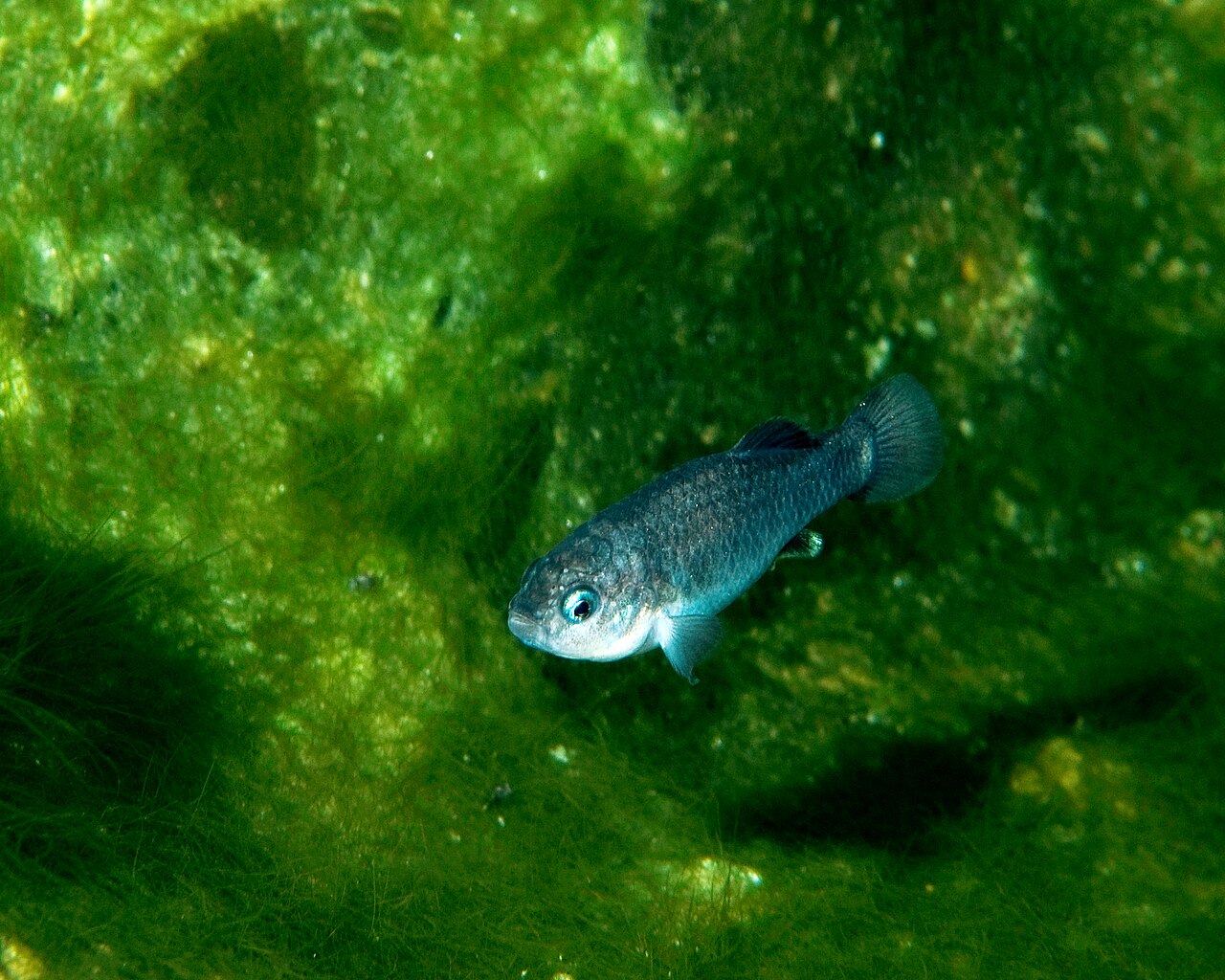
Biologists counting fish this fall in Devils Hole, a water-filled cavern in Death Valley National Park's Nevada section, found 137 Devils Hole pupfish, the Pahrump Valley Times reported on 11 November. That is up from 77 last spring and 69 a year ago. The tiny blue fish, often called the most endangered fish in the world, lives naturally nowhere else.
The recovery took a lot of effort. Scientists released 72 captive-bred pupfish into Devils Hole between March 2025 and February 2026, raised in a 100,000-gallon replica of the habitat nearby. They also helped restore the algae the fish feed on, after two earthquakes in 2025 disrupted it. Because pupfish live only 10 to 14 months, biologists say most of the fish counted this fall hatched in Devils Hole itself.
"While challenges remain, we're encouraged by this progress and committed to its long-term survival," said Death Valley National Park Superintendent Mike Reynolds.
The species has been protected since 1967, and its survival still depends on keeping the groundwater that feeds Devils Hole from being pumped away.
How you can help: The Amargosa Conservancy works to protect the lands, waters and wildlife of the Amargosa River watershed, which includes Devils Hole and Ash Meadows.
Why it matters
None of today's stories is a miracle, but all five show steady work paying off: a utility fixing old pipes, farmers investing in other farmers, a government counting its classrooms honestly, health experts showing that cholera deaths can be stopped, and scientists bringing back a fish that almost disappeared. Each one also shows how much is left to do, and how much it helps when people keep at it.
Learn more
- Solomon Islands Government: Solomon Water commissions new water treatment plant in Noro
- Solomon Times: Solomon Water commissions new treatment plant at Noro
- IFAD: IFAD announces US$70m rural climate adaptation bond bought by Zenkyoren
- Nyasa Times: Malawi launches 2026 education review and five-year investment plan
- UN News: Ending cholera by 2030 'within reach'
- Pahrump Valley Times: Devils Hole pupfish population rebounds
Sources: Solomon Islands Government / Solomon Water, "Solomon Water commissioned new Water Treatment to strengthen Water Security in Noro," 11 November 2026; IFAD, "IFAD announces US$70m rural climate adaptation bond bought by Zenkyoren," 9 November 2026; Nyasa Times, "Malawi launches 2026 education review and five-year investment plan," 10 November 2026; UN News, "World News in Brief: Ending cholera by 2030 'within reach'," 10 November 2026; Pahrump Valley Times, "Devils Hole pupfish population rebounds as count doubles since last fall," 11 November 2026.
💬 0 replies
Sign in to reply.