
Safe Water for Three Philippine Islands, a Vaccine Drive for Nearly a Million Yemeni Children and More
Today's five stories travel from the islands of the southern Philippines to a climate summit in Türkiye, a community learning center in Cameroon, health posts across southern Yemen and the reefs just off Rio de Janeiro. Each one shows people taking practical steps toward a…
Show moreShow less
Today's five stories travel from the islands of the southern Philippines to a climate summit in Türkiye, a community learning center in Cameroon, health posts across southern Yemen and the reefs just off Rio de Janeiro. Each one shows people taking practical steps toward a healthier, fairer world, and each comes with honest work still ahead.
💧 Clean Water: World Bank financing to bring safe water to three Philippine islands
The Philippines has secured 212.7 million euros, about 14.98 billion pesos, in World Bank financing to improve water supply and sanitation in poor and underserved areas, The Manila Times reported on November 8. The Department of Finance arranged the loan, which will fund the Accelerated Water and Sanitation Project in Selected Areas.
The project will build a bulk water supply system, a septage treatment plant and water, sanitation and hygiene facilities on the islands of Bohol, Siargao and Sulu. It will be carried out by the Department of Public Works and Highways and the Department of the Interior and Local Government, and it is the first phase of a wider World Bank program on water security and climate resilience in East Asia and the Pacific.
The timing matters. The government says the money will also support its plan to soften the impact of an expected "super El Niño," which can bring drought and strain water supplies. The work now is to build the systems well, keep them running and make sure the poorest households on these islands are the first to benefit.
How you can help: Water.org helps families in the Philippines get safe water and sanitation at home through small, affordable loans.
🌾 Food and Nutrition: WFP asks COP31 to fund action before hunger strikes
As the UN climate summit COP31 opened in Antalya, Türkiye, the World Food Programme urged leaders on November 9 to put money in place before disasters hit, so that predictable droughts, floods and storms do not turn into hunger emergencies. WFP's analysis projects that the current El Niño could push at least 49 million more people into acute food insecurity by the end of 2027.
The approach already works. Between January and September this year, WFP reached 4.9 million people with early warnings and helped more than 1.5 million people before forecast floods, storms and droughts arrived, using 46.2 million dollars in pre-arranged funds. That can mean cash for a family to protect its harvest or livestock before a drought peaks, instead of food aid after crops have already failed.
"El Niño will intensify that pressure, but because it can be predicted, we have a chance to act before crops fail, livelihoods are lost, and hunger sets in," said Carl Skau, WFP's Deputy Executive Director and Chief Operating Officer.
The gap is large: pre-arranged financing makes up less than two percent of global humanitarian funding. WFP is asking for more predictable funding, easier access for fragile countries and stronger national early warning systems.
How you can help: Action Against Hunger works with communities in more than 50 countries to prevent and treat hunger and malnutrition, including before and after climate shocks.
📚 Education Access: In Cameroon, children in crisis areas learn to read again
In Cameroon, where overlapping crises have kept many children out of school, a program backed by Education Cannot Wait is helping them back into learning, UNESCO reported on November 6. Through the program, UNESCO's work has reached 36,470 children with non-formal education, including 2,907 children with disabilities, and supported more than 213,000 learners in over 450 schools and training centers.
One of them is a nine-year-old girl UNESCO calls Grace, who had never been to school. She now attends a community learning center in Molyko, Buea, in the South-West Region twice a week, learning through radio lessons and hands-on activities. "Now, I'm learning to read, write. One day, I hope to become a nurse," she told UNESCO. The program has also trained 1,209 facilitators and supervisors. In Mbouda, teacher Paulette now uses games and art in class. "After 25 years of teaching, I am still learning," she said.
The need remains great. Millions of children in crises worldwide still face barriers to school, and Education Cannot Wait is seeking 600 million dollars to reach 10 million children and adolescents in 2027 to 2030.
How you can help: Plan International Cameroon supports children, especially girls, to stay safe and keep learning in Cameroon.
🩺 Health and Wellness: Yemen launches a vaccine drive for nearly a million children
Yemen's Ministry of Public Health and Population, supported by the World Health Organization and Gavi, the Vaccine Alliance, has launched a measles-rubella vaccination campaign to protect more than 957,000 children aged 6 to 59 months across 11 southern governorates, WHO announced on November 8.
The campaign covers 100 districts with 2,291 vaccination teams. Of those, 1,648 are mobile teams that travel directly to communities, including remote villages and sites where recently displaced families are living. More than 5,221 health workers and 592 supervisors are taking part, and an independent survey afterwards will look for children who were missed.
"Every child deserves protection from vaccine-preventable diseases, regardless of where they live or the challenges their families face in accessing health services," said Dr. Syed Jaffar Hussain, WHO Representative in Yemen.
Measles and rubella still cause preventable illness, disability and death among Yemen's children, and many communities have limited access to routine health care. One campaign cannot fix that alone, but reaching nearly a million children is an important shield.
How you can help: Save the Children runs health and nutrition programs for children in Yemen.
🌳 Healthy Environment: Divers off Rio fight back against an invasive coral
Off Brazil's coast, volunteer divers are removing an invasive species colony by colony, Mongabay reported on November 7. Sun coral, native to the Indo-Pacific, was first seen in Brazil in the 1980s on an offshore oil platform in Rio de Janeiro state. It is now found along about 3,500 kilometers (roughly 2,175 miles) of coastline and can spread about 2 kilometers a year.
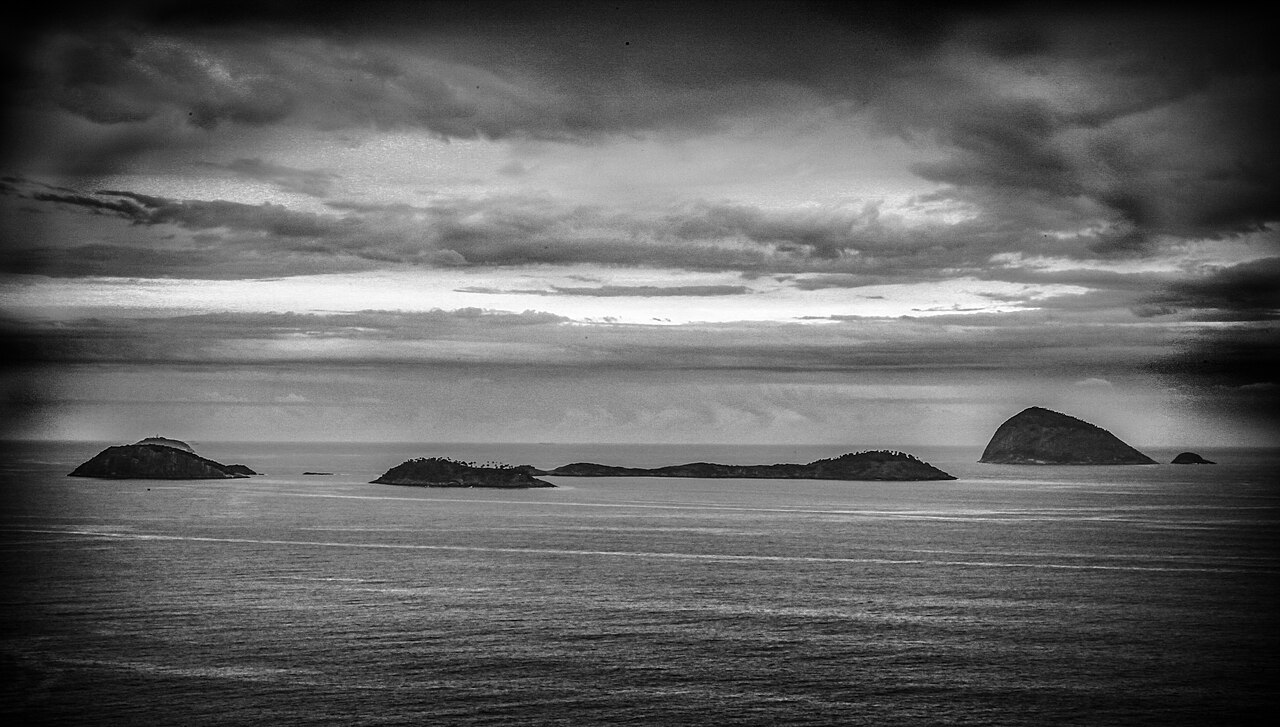
With no natural predators, sun coral takes over rocky reefs and releases chemicals that harm native species, including Brazil's brain and star corals. Brazil created a national plan in 2018 to prevent, control and monitor the invasion. On the front line is marine biologist Adriana Gomes of the Chico Mendes Institute for Biodiversity Conservation (ICMBio), who works with volunteers around the Cagarras Islands, a protected area about 5 kilometers off Ipanema Beach that has been named a Hope Spot for ocean health.
The work is slow and hands-on, and the coral keeps spreading along the coast. But Brazil's coordinated effort could offer lessons for other countries facing invasive species.
How you can help: Oceana campaigns to protect and restore ocean life in Brazil and other countries.
Why it matters
Today's stories share one lesson: acting early works. Water systems built before a drought, funding released before a harvest fails, vaccines given before an outbreak, classes that reach children before they fall too far behind, and divers who step in before a reef is lost. In each case, steady support turns a good start into lasting change.
Learn more
- The Manila Times: Clean and accessible water for Filipinos in underserved areas with 212.7 million Euros World Bank financing
- WFP: At COP31, World Food Programme Urges Use of Innovative Finance to Prevent Climate Shocks from Becoming Hunger Emergencies
- UNESCO: Dreaming of becoming a nurse: Opening doors to education in Cameroon
- WHO EMRO: WHO launches measles-rubella vaccination campaign to protect nearly one million children in southern Yemen
- Mongabay: These divers are killing a beautiful coral to save Brazil's marine life
Sources: The Manila Times, "Clean and accessible water for Filipinos in underserved areas with 212.7 million Euros World Bank financing," 8 November 2026; World Food Programme, "At COP31, World Food Programme Urges Use of Innovative Finance to Prevent Climate Shocks from Becoming Hunger Emergencies," 9 November 2026; UNESCO, "Dreaming of becoming a nurse: Opening doors to education in Cameroon," 6 November 2026; WHO Eastern Mediterranean Regional Office, "WHO launches measles-rubella (MR) vaccination campaign to protect nearly one million children in southern Yemen," 8 November 2026; Mongabay, "These divers are killing a beautiful coral to save Brazil's marine life," 7 November 2026.
💬 0 replies
Sign in to reply.