
Was The Starry Night a Real Sky? Astronomers Point to a July Dawn in 1889
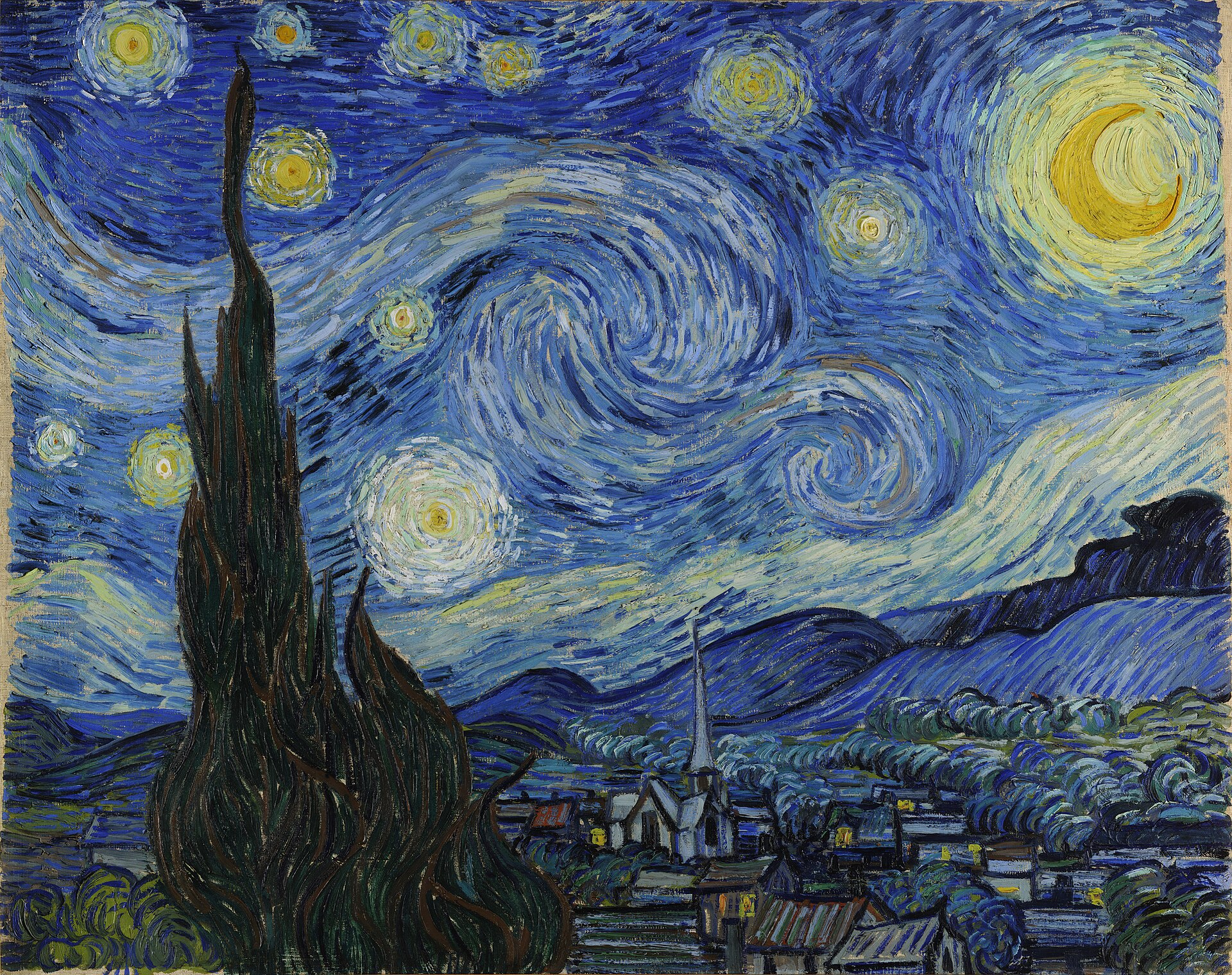
In the early hours of a summer morning in 1889, Vincent van Gogh looked out from his window at the asylum of Saint-Paul-de-Mausole in Saint-Rémy-de-Provence, in southern France. What he saw there may have been far more real than most of us assume when we look at The…
Show moreShow less
In the early hours of a summer morning in 1889, Vincent van Gogh looked out from his window at the asylum of Saint-Paul-de-Mausole in Saint-Rémy-de-Provence, in southern France. What he saw there may have been far more real than most of us assume when we look at The Starry Night.
A study published on October 22 in the open-access journal Scientific Reports argues that the painting's sky matches an actual pre-dawn view: a thin waning crescent Moon, the planet Venus, and the Hyades, a V-shaped star cluster in the constellation Taurus, gathered together in the eastern sky around July 22, 1889.
Standing where the painter stood
The team, led by Elijah Jeong-hyun Kim of Kyung Hee University's School of Space Research and the South Korean company SLLAB, began on the ground. Through field surveys in France, they identified a ridge southwest of the asylum that closely matches the landscape in an earlier Van Gogh drawing of the same village scene. Comparing the drawing with photographs from that spot, they found the artist had framed a surprisingly narrow slice of the view, similar to looking through a telephoto lens.
"I was standing where Vincent had stood 130 years earlier," Kim told The Guardian.
The researchers then recreated the dawn sky over Saint-Rémy for June and July 1889 and searched for mornings when the Moon sat above Venus, as it does in the painting, with both fitting inside that narrow frame. Only three dawns qualified. On July 22, the Hyades fell near the center of the frame, with the Moon and Venus near opposite corners.
Measuring the shape of the stars
To test the match, the team used a statistical technique called Procrustes analysis, which compares the shapes of two sets of points after adjusting for size, position and rotation. They found that a cluster of stars at the center of the canvas closely follows the shape of the Hyades V, and that the tilt of that group in the painting falls within the range the real cluster would have shown on that morning. They also tested their method on other night paintings, including Van Gogh's 1888 Starry Night over the Rhône, in which he painted the Big Dipper.
The authors cross-checked their date against 1889 weather records and Van Gogh's own letters. Writing to his brother Theo in late May or early June 1889, the artist described seeing the countryside from his window "a long time before sunrise with nothing but the morning star, which looked very big."
A lively debate
The findings challenge the painting's accepted date. Art historians have long placed it in June 1889, based partly on a letter of about June 18 in which Van Gogh mentions "a new study of a starry sky." The Van Gogh Museum in Amsterdam, which was not involved in the research, told The Guardian that its experts had established a June date, noting that the artist suffered a severe breakdown around July 22 that left him unable to paint for more than a month. "Van Gogh was not concerned with exact likenesses," a museum spokesperson said.
Donald Olson, professor emeritus of physics and astronomy at Texas State University was also unconvinced. He told The Guardian that the narrow field of view the study assumes does not fit the much wider view needed to take in the painting's hills and cliffs.
The authors themselves acknowledge their results are not conclusive. They suggest Van Gogh may have blended observations from several nearby nights, and Kim proposed that the artist may have conceived the painting in June and completed it after July 22.
Look up and see it for yourself
Whatever the final verdict, the study is an invitation to do what Van Gogh did: go outside before sunrise and look east. The Hyades are one of the nearest star clusters to Earth and are easy to find in the constellation Taurus, near the bright orange star Aldebaran. In late summer they rise in the pre-dawn sky, and on autumn and winter evenings they rise in the east after dark and climb higher through the night. Find a dark spot, give your eyes time to adjust, and you may see the same V of stars that may have found its way onto one of the most beloved paintings in the world.
Source: Kim et al., "The actual sky of Van Gogh's Starry Night: a multidisciplinary reconstruction," Scientific Reports, October 22, 2026. Additional reporting from The Guardian and Space.com.
💬 0 replies
Sign in to reply.