
Hiding in Plain Sea: A Surprise Baby Right Whale Off Quebec Brings This Year's Calves to 24
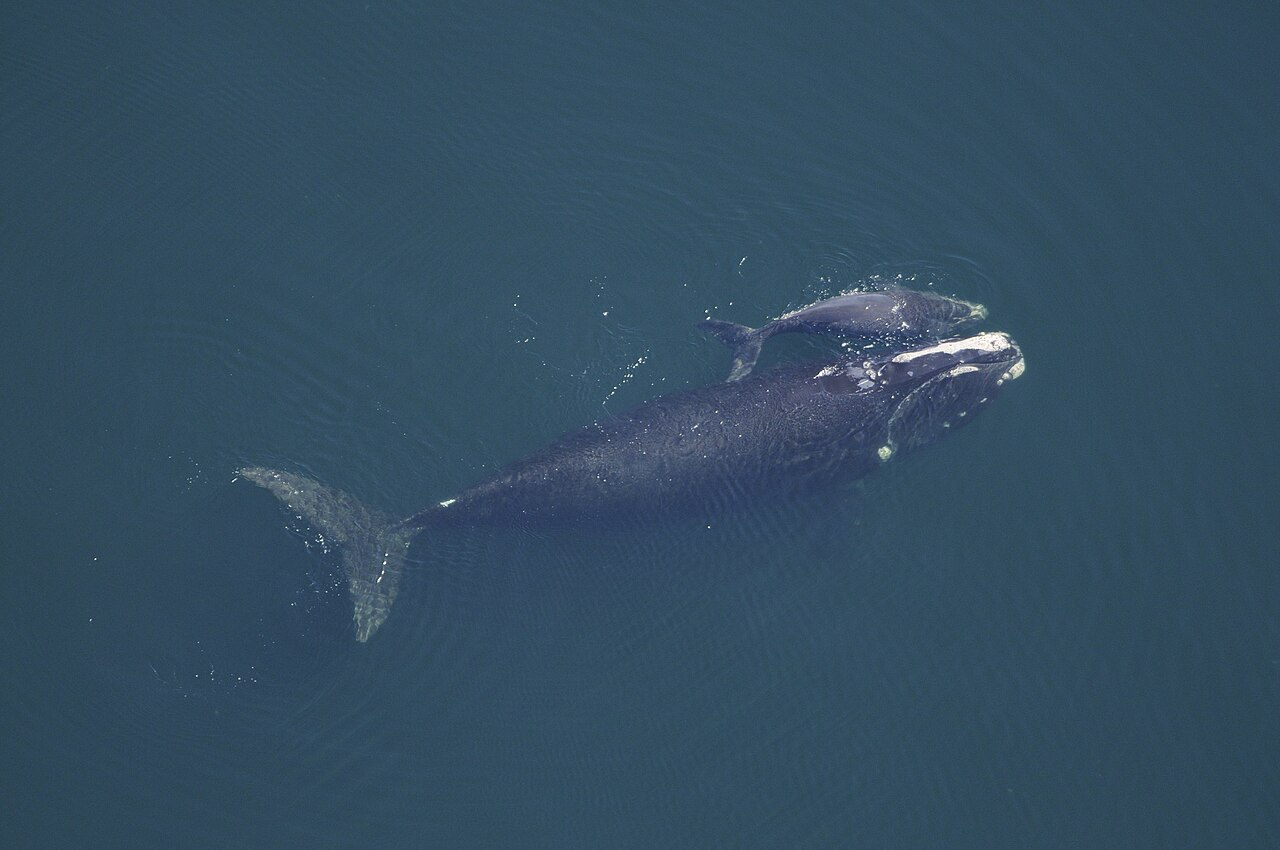
For months, one of the rarest animals in the ocean slipped past every survey boat and spotter plane on the East Coast of North America. Now scientists have found it: a previously unknown North Atlantic right whale calf, swimming with its mother off Anticosti Island in Quebec,…
Show moreShow less
For months, one of the rarest animals in the ocean slipped past every survey boat and spotter plane on the East Coast of North America. Now scientists have found it: a previously unknown North Atlantic right whale calf, swimming with its mother off Anticosti Island in Quebec, Canada. The New England Aquarium in Boston announced the discovery on 2 November, and the Associated Press reported on 6 November that researchers could not be happier.
The surprise baby brings the number of calves from the latest birthing season to 24. According to the aquarium, that makes it the fourth-highest count on record, and the AP reports it is the most productive year for the species since 2009. For a population of only about 380 whales, every new calf counts.
A mother who kept a secret
Researchers from the Mingan Island Cetacean Study, a nonprofit research group in Quebec's Côte-Nord region, photographed a right whale mother and calf near Anticosti Island on 25 September. They shared the images with scientists at the New England Aquarium's Anderson Cabot Center for Ocean Life, who keep the North Atlantic Right Whale Catalog, a photo-identification record of individual whales. After weeks of comparing photos and sighting data, the team concluded the calf was most likely born during the 2025–2026 calving season and had simply never been seen.
Its mother is a whale known as Silt (Catalog #1817), who is at least 38 years old. This is her sixth known calf. She also has three grandchildren, and her first great-grandchild was born this year.
"Silt was briefly seen in the southeastern U.S. calving grounds in February 2026, so it's possible she had the calf there but snuck away before they were documented together. This is an exciting discovery for us so late in the year," said Amy Warren, a scientist at the aquarium's Anderson Cabot Center.
Richard Sears, founder and director of the Mingan Island Cetacean Study, told the AP: "It just goes to show you how big the ocean is, and how those animals can get lost out there."
Still a species in danger
Silt's own life shows what right whales are up against. The aquarium says she has survived at least five entanglements in fishing gear, which left heavy scarring on her head and tail. Her 2022 calf, Division, died from a severe entanglement earlier this year, and her eldest calf was killed by a ship strike in 2005.
Right whales give birth off the southeastern United States in winter, then travel north to feed off New England and Canada. The AP reports that the population fell by about 25 percent between 2010 and 2020, that only about 70 females of breeding age remain, and that no calves at all were born in 2018. Warming seas have pushed the whales away from protected areas and into new risks. The population has regained some ground since 2020, but conservationists have criticized recent moves by the U.S. government to delay new protections for the whales for a decade.
Scientists say they hope to document the new calf again, and that it avoids the hazards that have harmed so many of its family.
Why it matters
A species this small cannot recover without strong calving years, and this one is among the best on record. The surprise calf is a reminder that patient, shared science, from a small Quebec research station to a Boston photo catalog, still turns up good news, and that safer fishing gear and slower ships can give each new whale a real chance to grow up.
Learn more
- Associated Press (via Maine Public): Scientists discovered an unknown baby right whale off Canada
- New England Aquarium: Previously unknown North Atlantic right whale calf spotted in Canadian waters
- North Atlantic Right Whale Catalog: Silt (#1817)
Sources: Associated Press (Maine Public), "Scientists discovered an unknown baby right whale off Canada. They say it's a cause for joy," 6 November 2026; New England Aquarium, "In surprise sighting, previously unknown North Atlantic right whale calf is spotted in Canadian waters," 2 November 2026.
How you can help
These groups study and protect North Atlantic right whales and the waters they depend on:
- New England Aquarium runs the Anderson Cabot Center for Ocean Life, which maintains the North Atlantic Right Whale Catalog that identified this calf.
- Mingan Island Cetacean Study is the Quebec nonprofit whose researchers photographed Silt and her calf in the Gulf of St. Lawrence.
- Center for Coastal Studies carries out independent field research, including right whale studies, and marine animal rescue in Cape Cod Bay and beyond.
💬 0 replies
Sign in to reply.