
A Rosetta Stone for Mars: A Rose-Colored Rock From the Sahara Is One of the Oldest Martian Meteorites Ever Found
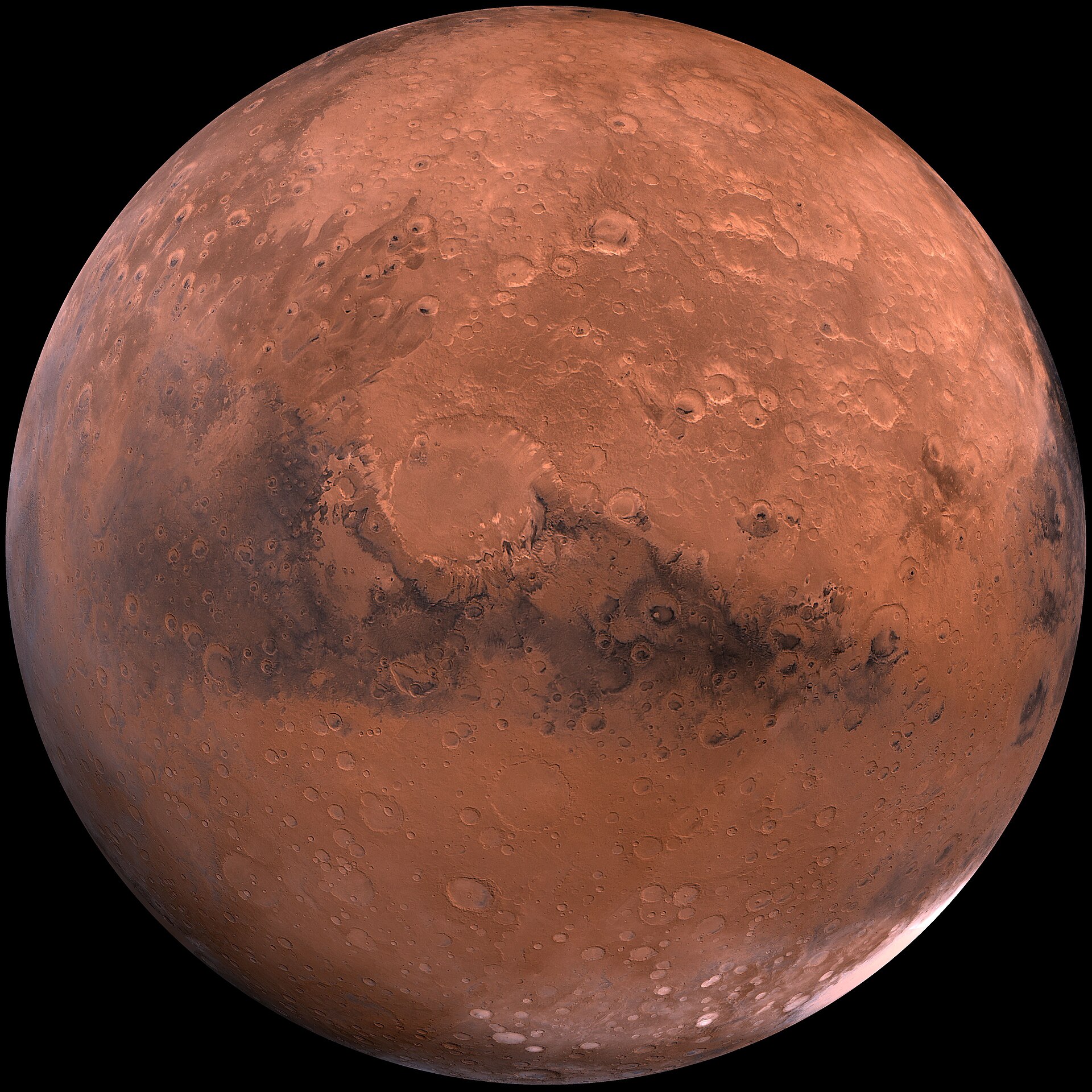
In 2022, a rose-colored stone weighing about 800 grams, nearly two pounds, was found on a salt plain in Mali's Sahara Desert. No one knew how old it was or where it came from. Now NASA-funded scientists have shown that it is a piece of Mars that formed more than 4.1 billion…
Show moreShow less
In 2022, a rose-colored stone weighing about 800 grams, nearly two pounds, was found on a salt plain in Mali's Sahara Desert. No one knew how old it was or where it came from. Now NASA-funded scientists have shown that it is a piece of Mars that formed more than 4.1 billion years ago, making it one of the oldest Martian meteorites ever found.
The meteorite is named Teghaza 001, after the salt plain where it was discovered, and it is one of roughly 435 known meteorites from the Red Planet, according to NASA's Jet Propulsion Laboratory. A paper published on Thursday, 29 October, in the journal Science offers the first detailed characterization of the rock.
A window onto ancient Mars
"It was only after we started looking closely that we realized this meteorite is really unique," said lead author Yang Liu of JPL. "One of the paper's reviewers called it a Rosetta Stone for Mars."
NASA says Teghaza 001 stands out for its age, its texture and its mix of igneous minerals, which tell a story of crust forming from cooling magma before it was later altered by water underground. Its mineralogy matches what NASA's Mars Reconnaissance Orbiter has seen in the planet's cratered southern highlands, and the researchers identified 13 locations on Mars that match its chemistry, though no one can know exactly where it came from.
"This is really our first piece of Martian crust from a part of Mars we've never had a sample of before," said second author Lee Saper, now a scientist at NASA's Ames Research Center. "It records interactions of water and rock and maybe even an imprint of the Martian atmosphere as it was losing water."
Careful science on a tiny fragment
The team found zircon crystals in the rock, which allow precise dating. Caltech coauthor Francois Tissot's group used an in-place rubidium and strontium dating method on a piece smaller than a fingernail, analyzing single mineral grains while preserving the rare sample for future research. A separate paper in Science Advances in June described the meteorite's water content.
There is wonder in this: a stone blasted off another world by an impact, carried across space, landing in a desert, and finally read like a letter by patient people on Earth. It reminds us how much can be learned when curiosity is paired with care.
Learn more
- Read the NASA article.
- See the research paper in Science.
- Visit a natural history museum or meteorite collection near you.
Source: NASA Jet Propulsion Laboratory, "NASA-funded Study Details One of Oldest Mars Meteorites Ever Found," 29 October 2026.
💬 0 replies
Sign in to reply.