
Delhi Sets District Targets for Cleaner Air, Brazil's Amazon Policy Proves Itself and Jamaica Grows Tougher Corals
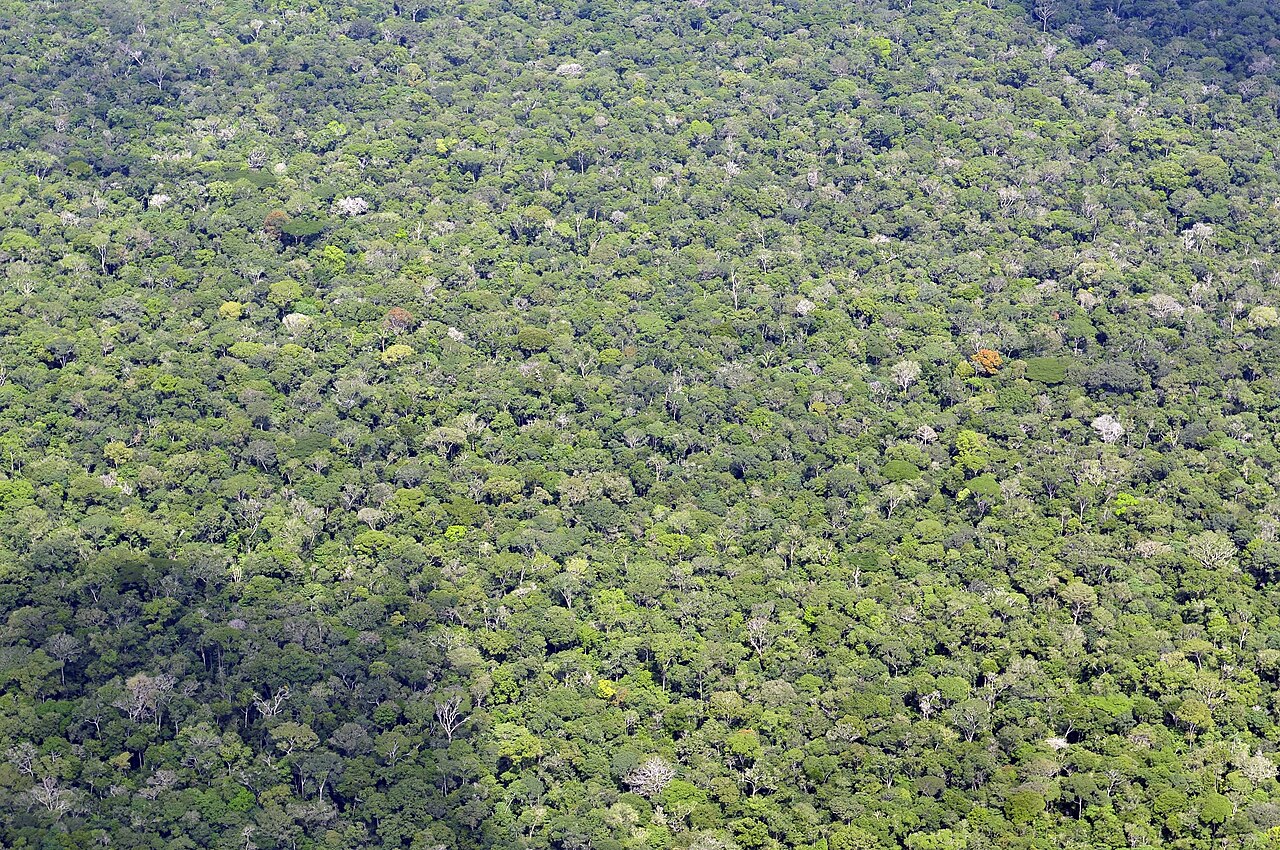
Today's environment roundup takes us from the smoggy winter air of India's capital region to the Brazilian Amazon and the reefs off Jamaica's north coast. In each place, people are turning lessons into action: setting clear targets for cleaner air, showing that a forest policy works, and growing corals that can survive a warming sea.
India: Delhi's districts get their own clean-air targets
On Saturday, India's Commission for Air Quality Management (CAQM) told Delhi and its neighboring states to cut annual average air pollution in the National Capital Region by at least 15% in 2027 compared with 2026, and to aim for 20%, English Bombay Samachar reported. For the first time, every district must write its own clean-air plan and name the officers responsible for carrying it out. The plans cover Delhi and the region's areas in Haryana, Uttar Pradesh and Rajasthan, and are due by December 5, 2026.
Each plan has to tackle local sources such as vehicle exhaust, road dust, industry, construction dust, municipal waste, crop residue, diesel generators and crematoria, with a target, a deadline and a way to track progress for every measure. Progress will be judged on the year-round average Air Quality Index and levels of fine particles (PM2.5 and PM10), not just on the worst smog weeks. "This marks a significant shift towards quantifiable outcomes rather than merely listing pollution control measures and activities," the commission said in its release, as reported by The Federal.
The announcement comes as winter weather again traps pollution close to the ground and crop burning in nearby states adds to the haze. Targets on paper only help if districts follow through, and the next test is whether the plans arrive on time and lead to cleaner air through 2027.
Brazil: proof that the Amazon "Priority List" works
A peer-reviewed study in the Proceedings of the National Academy of Sciences, reported by Phys.org on November 19, finds that one of Brazil's main tools against Amazon forest loss has worked. The Priority List places municipalities with high deforestation under closer monitoring and enforcement, along with economic restrictions and limits on subsidized farm credit and markets.
Researchers studied 772 municipalities in the Brazilian Legal Amazon, 88 of which had been placed on the list. Being listed cut deforestation by an average of 30.7 square kilometers (11.9 square miles) per municipality each year, about 33% of what those places cleared before. The biggest cuts came on private land, and the team found no sign that clearing simply moved elsewhere; neighboring municipalities cleared less too. "The priority list does appear to simply be a very effective policy," said co-author Erin Sills of North Carolina State University.
Nature World News notes that the authors urge some caution, because listed and unlisted places were not on perfectly matching paths before the policy. The study lands as Brazil's Amazon clearing has fallen to its lowest level since 1988, according to official figures reported in October, though the forest still loses thousands of square kilometers a year.
Jamaica: a nursery for corals that can survive bleaching
A US$1 million, 10-year project to restore Jamaica's coral reefs has launched at the White River Fish Sanctuary in St Ann, The Gleaner reported on November 19. Funded by the company West Indies Petroleum, the project was formalized in an agreement with the White River Marine Association and sets up a coral conservation hub with a nursery to grow bleaching-resistant corals, which will later be shared with fish sanctuaries across the island.
The sanctuary has already mapped corals that survived bleaching, and the company's chief executive, Charles Chambers, said the lab could produce 15,000 new corals a year. Sanctuary manager Jonathan Hernould called the initiative the first of its kind in Jamaica. "It's an important step in practical implementation of protection and restoration," said Matthew Samuda, the local Member of Parliament.
Coral restoration can help reefs recover, but it cannot replace cutting the pollution that heats the ocean, and it is notable that the funding comes from a fuel company. The real measure will be how many corals survive and spread over the coming decade.
Why it matters
Each of these stories is about accountability and evidence. Delhi is naming who is responsible for cleaner air, Brazil now has hard proof that holding whole regions to account can slow forest loss, and Jamaica is betting on the corals that have already shown they can survive. Clear goals, honest measurement and patient local work are how a healthier environment gets built.
Learn more
- English Bombay Samachar: Delhi-NCR Targets 15–20% Cut In Air Pollution In 2027, Seeks First District Plans
- The Federal: Delhi-NCR districts get 15-20 pc pollution reduction targets for 2027 from CAQM
- Phys.org: Brazil's approach to deforestation delivers major reductions in Amazon forest loss
- Nature World News: Brazil's "Priority List" Cut Amazon Deforestation by About a Third in Targeted Towns, PNAS Study Finds
- Jamaica Gleaner: WIP launches US$1m coral reef restoration project
Sources: English Bombay Samachar, "Delhi-NCR Targets 15–20% Cut In Air Pollution In 2027, Seeks First District Plans," 21 November 2026; The Federal, "Delhi-NCR districts get 15-20 pc pollution reduction targets for 2027 from CAQM," 21 November 2026; Phys.org (North Carolina State University), "Brazil's approach to deforestation delivers major reductions in Amazon forest loss," 19 November 2026; Nature World News, "Brazil's 'Priority List' Cut Amazon Deforestation by About a Third in Targeted Towns, PNAS Study Finds," 20 November 2026; Jamaica Gleaner, "WIP launches US$1m coral reef restoration project," 19 November 2026.
How you can help
These organizations work on the issues in today's stories:
- Centre for Science and Environment researches and campaigns for cleaner air in Delhi and across India.
- IPAM Amazônia works with Amazon farmers, communities and governments on science-based ways to end deforestation.
- Jamaica Environment Trust protects Jamaica's natural resources, including its coasts and reefs, through education, advocacy and the law.
💬 0 replies
Sign in to reply.