
UNESCO Maps the Preschool Gap, Rural Morocco Fills Its Classrooms and Nigeria Counts Missing Learners
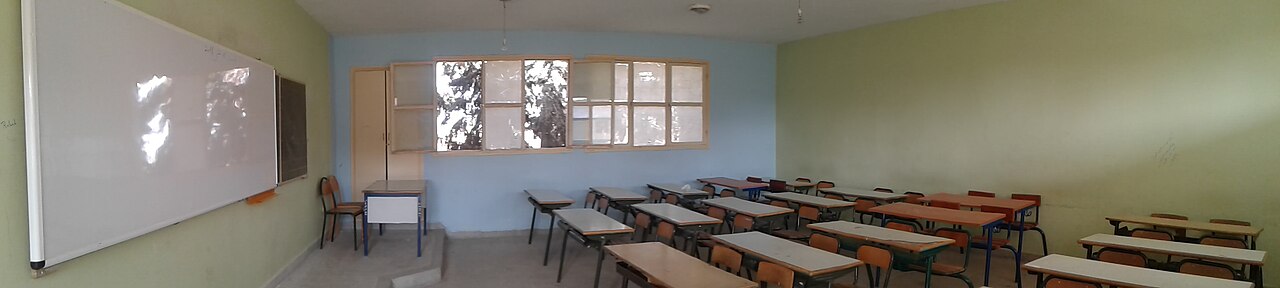
World Children's Day, on 20 November, put the youngest learners in the spotlight. Today's roundup starts with a new global report on preschool from UNESCO, UNICEF and the OECD, then travels to rural Morocco, where preschool has spread remarkably fast, to northwest Nigeria, where hundreds of thousands of children are still waiting to get back into a classroom, and to Europe, where eight countries are pooling digital tools for their schools.
Global: the world's preschool gap comes into focus
UNESCO launched the 2026 Global Report on Early Childhood Care and Education at its Paris headquarters on 20 November, published jointly with UNICEF and the OECD. Its central message is that early learning pays off but remains badly underfunded. According to UNESCO's announcement, every dollar invested in closing childcare policy gaps could add an estimated $3.76 to global GDP by 2035, while the cost of inaction averages about 3% of GDP worldwide and up to 7% in low-income countries.
Access has grown over the long run: enrollment in early childhood education rose from 64% in 2003 to 75% in 2024. But growth has stalled over the past decade. Only 59% of children entering primary school have had at least one year of pre-primary education, a share that has barely moved since 2015. Participation one year before primary school is above 90% in Europe and Northern America and in Latin America and the Caribbean, but close to 50% in sub-Saharan Africa and in Northern Africa and Western Asia.
The report estimates that low- and lower-middle-income countries would need about $69 billion a year between 2027 and 2030 to give children one year of pre-primary education of minimum quality. Public money is projected to cover only half, leaving a gap of about $35 billion a year. The world will also need about 6 million more pre-primary educators by 2030, Xinhua reported. "The first years of a child's life are crucial, yet early childhood care and education remains severely underfunded globally," said UNESCO Director-General Khaled El-Enany.
Morocco: rural preschool becomes the norm
Alongside the global report, UNESCO's Global Education Monitoring Report launched a regional edition for the Arab States that includes a case study of Morocco, Assahifa reported on 20 November. It describes one of the fastest expansions of early learning anywhere. In 2018 Morocco set a goal of universal preschool for children aged 4 and 5, with special attention to rural and disadvantaged communities.
The results have been striking. Over the six years starting in 2018, preschool enrollment rose from 45% to 80% nationally and from 33% to 91% in rural areas, according to the World Bank. Rural girls saw the biggest change: about a quarter attended preschool in 2017, and 93% did by 2024. More than 9,500 new preschool teacher jobs have been created, most of them in rural areas. Citing the UNESCO case study, Assahifa reported that Morocco's public pre-primary budget rose from 1.12 billion dirhams in 2018/19 to 2.98 billion dirhams in 2024/25.
The work is not finished. The country still has to reach universal access for 4- and 5-year-olds by its 2028 deadline, and keeping quality high as classrooms multiply is the next test.
Nigeria: counting the children still out of school
In Sokoto on 20 November, Michael Juma, chief of UNICEF's Sokoto field office, said work with the governments of Sokoto, Kebbi and Zamfara states has identified about 624,000 out-of-school children, Channels Television reported. Roughly 98,000 children have taken part in Teaching at the Right Level, a program that boosts foundational reading and numeracy.
The briefing was frank about the distance still to go: only about 68,000 of the children identified have been reached through re-enrollment so far. Juma said the gap shows the need for firmer state leadership, steady funding and local mobilization, and said education programs in the three states had not been hit by funding cuts earlier in the year. "Every child, regardless of their circumstances," he said, deserves the chance to survive, learn, grow and reach their potential.
The same day in Abuja, children led a World Children's Day event at the United Nations House where they questioned officials about the barriers that keep millions of Nigerian children out of school, UNICEF Nigeria said.
Europe: eight countries pool digital tools for schools
The European Commission and eight member states (Belgium, Croatia, Finland, France, Greece, Slovenia, Spain and the Netherlands, which will host it) launched the European Digital Infrastructure Consortium on Education (EDU-EDIC) on 20 November. The consortium will pool resources to develop shared, secure and interoperable digital infrastructure and services for schools, teachers and learners, with work planned on cloud infrastructure, AI for education, secure data exchange between institutions and Europe's education technology sector.
The Commission says the effort should help narrow the digital divide in education by supporting tools that can be used across national education systems, whatever their resources. "Our priority is to ensure that education is ready for the AI era," said Executive Vice-President Roxana Mînzatu. For now, the consortium is a framework rather than tools already in classrooms, and its value will depend on what it delivers to teachers and pupils.
Why it matters
Children who start school ready to learn, children brought back into the classroom and teachers equipped with good tools are pieces of the same puzzle. Morocco shows how quickly access can change when a country commits money and teachers to its youngest children. The global report and the numbers from northwest Nigeria show how many children are still waiting for that chance.
Learn more
- UNESCO: Global Report on Early Childhood Care and Education. Financing for equity and quality
- Xinhua: UNESCO: Investment in early childhood education could generate nearly fourfold economic returns
- Assahifa: UNESCO Highlights Morocco's Rural Preschool Leap as World Faces $35 Billion Gap
- World Bank: From Vision to Impact: Preschool Enrollment Soars in Morocco
- Channels Television: 624,000 Out-Of-School Children Identified Across Sokoto, Kebbi, Zamfara – UNICEF
- UNICEF Nigeria: Nigerian Children Call on All Stakeholders to Make Their Survival, Learning, and Future a Shared Responsibility
- European Commission: European Digital Infrastructure Consortium launches today to strengthen digital sovereignty in education
Sources: UNESCO, "Global Report on Early Childhood Care and Education. Financing for equity and quality," 20 November 2026; Mirage News (UNESCO release), "UNESCO Calls for More Investment in Pre-Primary Education," 20 November 2026; Xinhua, "UNESCO: Investment in early childhood education could generate nearly fourfold economic returns," 20 November 2026; Assahifa, "UNESCO Highlights Morocco's Rural Preschool Leap as World Faces $35 Billion Gap," 20 November 2026; World Bank, "From Vision to Impact: Preschool Enrollment Soars in Morocco," 24 September 2025; Channels Television, "624,000 Out-Of-School Children Identified Across Sokoto, Kebbi, Zamfara – UNICEF," 20 November 2026; UNICEF Nigeria, "Nigerian Children Call on All Stakeholders to Make Their Survival, Learning, and Future a Shared Responsibility," 20 November 2026; European Commission, "European Digital Infrastructure Consortium launches today to strengthen digital sovereignty in education," 20 November 2026.
How you can help
These organizations work on the issues in today's stories:
- Theirworld campaigns for every child to get the best start in life, including more investment in early childhood education.
- Fondation Marocaine du Préscolaire (FMPS) works to expand quality preschool education across Morocco.
- TaRL Africa helps governments across Africa use the Teaching at the Right Level approach to build children's basic reading and math skills.
- Raspberry Pi Foundation helps young people realize their potential through computing and AI education.
💬 0 replies
Sign in to reply.